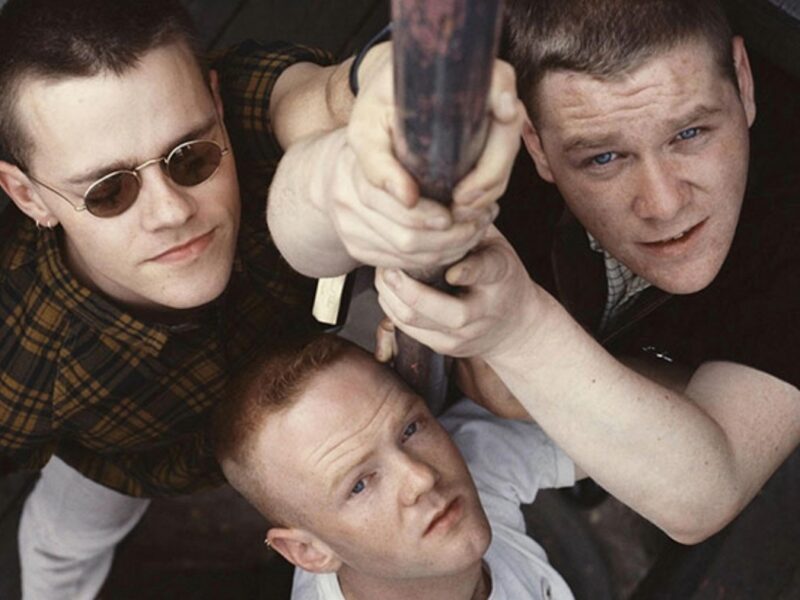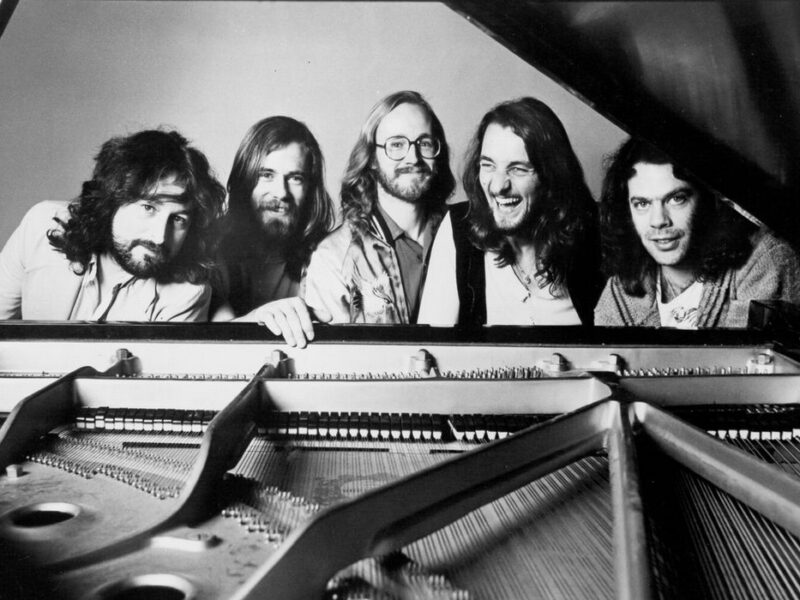

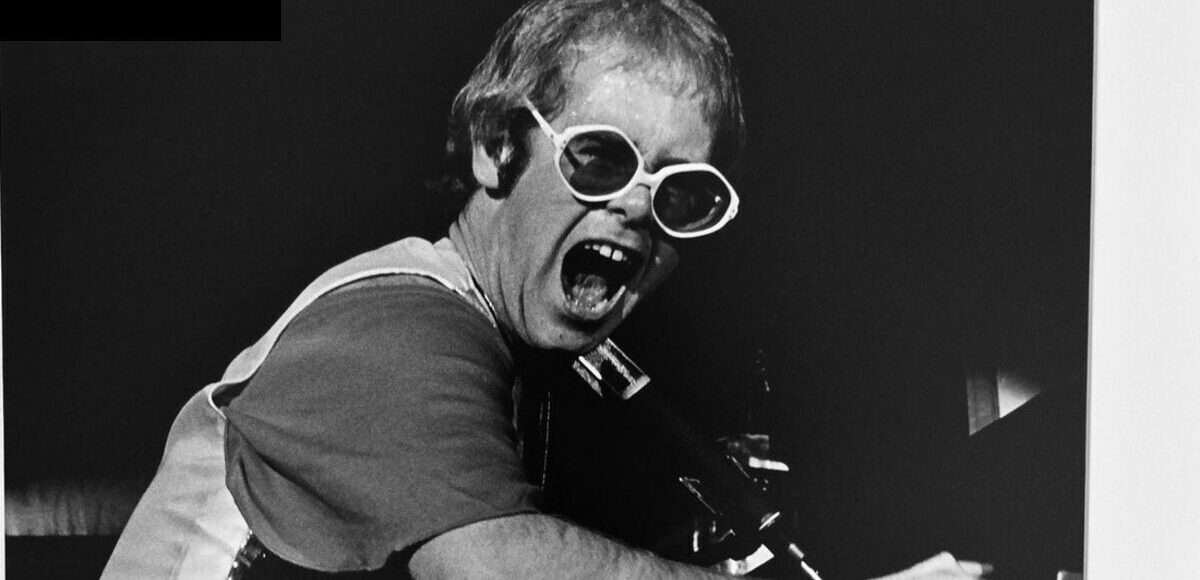
Taupin at the desk, Elton at the keys, arenas ahead
Reginald Dwight from Pinner renamed himself Elton John, paired with lyricist Bernie Taupin, and treated the piano as a lead guitar that could also sing. Empty Sky (1969) was the soft launch; Elton John (1970) and Tumbleweed Connection made the partnership audible: Taupin at the typewriter, Elton at the keys, arrangements that respected both.
“Your Song” put him on international radio with a modest vocal and a melody that did not need costume. Then the costumes arrived anyway. Honky Château, Don’t Shoot Me I’m Only the Piano Player, and Goodbye Yellow Brick Road (1973) stacked hits while Elton’s glasses, boots, and stage ducks turned the pianist into a pop spectacle. “Rocket Man,” “Daniel,” “Saturday Night’s Alright for Fighting,” “Bennie and the Jets”: different tempos, same writing desk.
Gus Dudgeon’s productions kept the records clear even when the wardrobe got loud. Dee Murray, Nigel Olsson, and Davey Johnstone locked the band sound that arena crowds learned by heart. Elton could still sit alone at a grand piano and hold a hall; the band dates proved he also liked volume when the song asked for it.
The mid-seventies were chart arithmetic at industrial scale: Captain Fantastic and the Brown Dirt Cowboy entered the U.S. album chart at number one, a first for that era’s Billboard rules. Taupin’s narratives (cowboys, suburbia, fame fatigue) gave Elton characters to inhabit without forcing him to write autobiography every night.
Excess followed success. Throat surgery, sobriety battles, and uneven eighties albums slowed the hit rate without erasing the earlier run. “I’m Still Standing” and later “Sacrifice” showed he could reset for new radio formats. The glasses stayed. So did the piano as the center of the brand.
Madman Across the Water and the early live albums showed a pianist who could fill halls before the stadium wardrobe fully arrived. Taupin’s American mythology (outlaws, frontiers, small-town exits) gave British Elton a cast of characters that matched the booming voice without requiring him to pretend he grew up in Texas. The partnership survived arguments, dry spells, and fashion changes because the desk method worked: lyric first, then melody that respected the vowels.
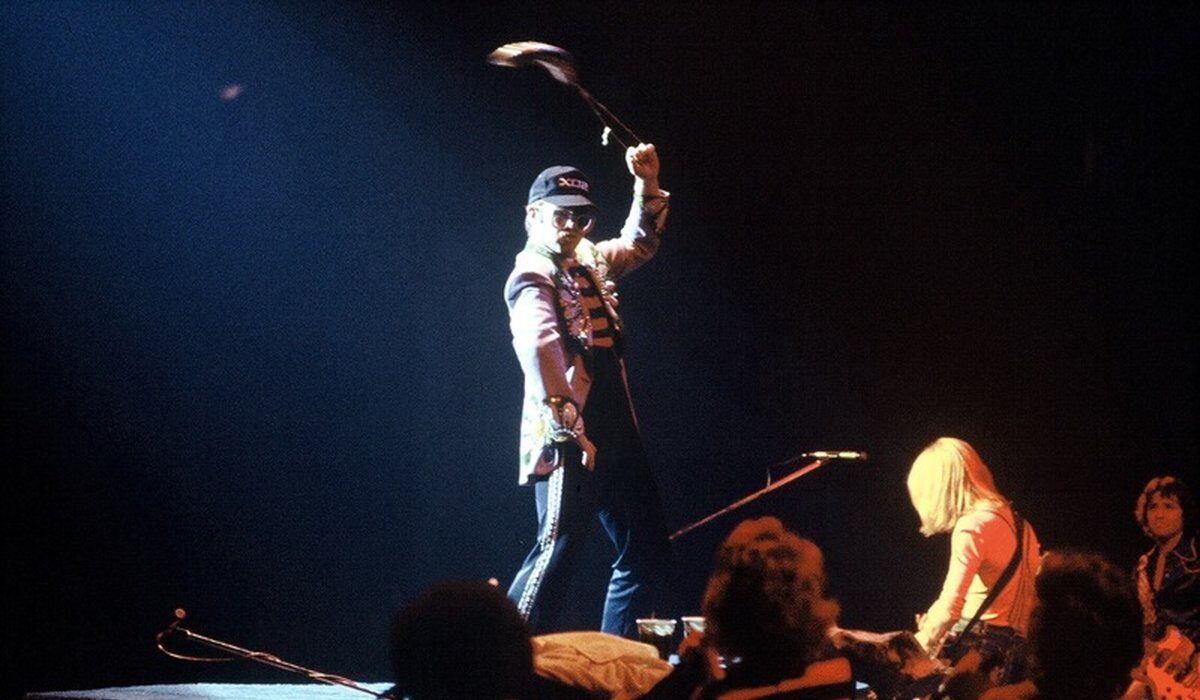
Caribou and Rock of the Westies kept the mid-seventies hit pressure high. When John took more control of lyrics later, some fans missed Taupin’s distance and irony; when they reunited for new albums in the 2000s, the old division of labor returned with adult themes. The glasses got bigger or smaller by decade. The piano stayed the negotiation table.
Critics who dismissed him as costume pop underestimated the harmonic literacy under the feathers. Session charts, key changes, and gospel-tinged outros were craft choices. The spectacle sold the ticket; the bench work sold the second listen.
The Lion King songs with Tim Rice opened another career lane; the farewell tour decades later sold like a victory lap. Knighthood, AIDS fundraising, and a memoir that did not flinch at the mess completed the public picture. Through it all, the Taupin catalog remained the spine.
From the Royal Opera House to Dodger Stadium farewells, the late career proved the songs traveled across rooms that should not share a booking sheet. Taupin still mailed lyrics. Elton still sat down and found the tune. The arithmetic stayed personal even when the production was global.
Elton John made piano-pop look theatrical without letting the theatre erase the songs. Spectacles sold tickets. Chart arithmetic started at the bench.