




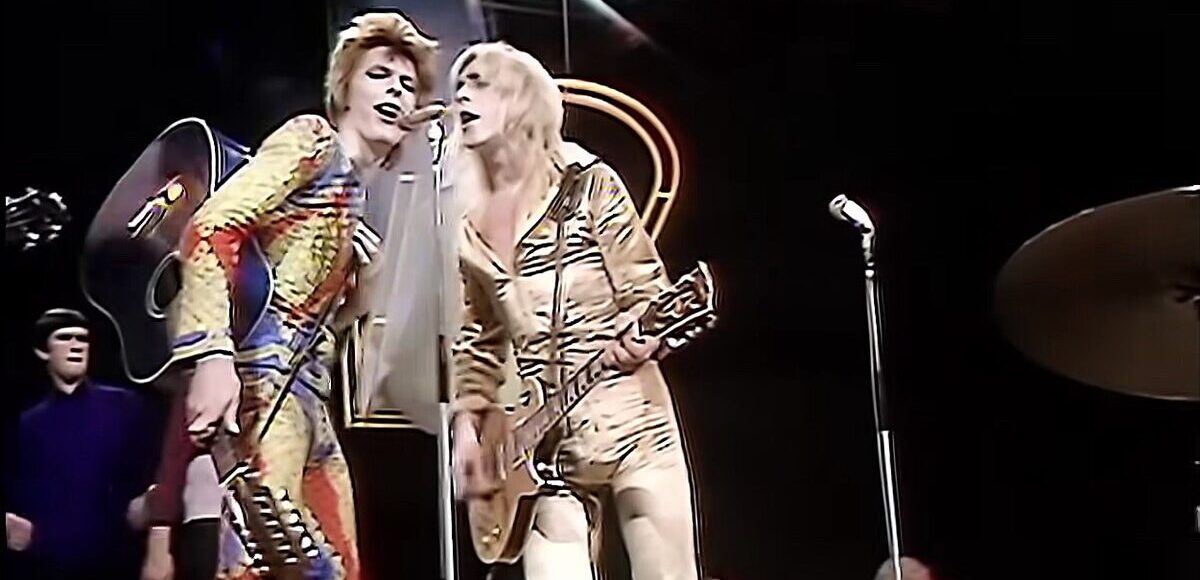
Top of the Pops, 5 July 1972: the arm around Ronson
Starman sits near the front of The Rise and Fall of Ziggy Stardust and the Spiders from Mars, released in June 1972 on RCA. Ken Scott co-produces with Bowie. Mick Ronson sharpens the guitar figure and the vocal blend. The lyric stages a radio message from someone waiting in the sky who might blow our minds if he landed. The chorus is built to be sung back in a living room. The alien story did not stay inside a small cult corner.
The album version already works as glam pop with a clear hook. The public turning point arrives on television. On 5 July 1972 at BBC Television Centre, Bowie tapes Starman for Top of the Pops, broadcast the next night. In a quilted jumpsuit, twelve-string on his back, he drapes an arm around Mick Ronson at the shared mic. UK teenagers and future band leaders watch the gesture as closely as the melody. For a generation of viewers, that night is the first time Ziggy feels public rather than underground rumour.
The single climbs into the UK Top 10. For many listeners it is the entry point into the whole Ziggy cycle. The messenger storyline stays light enough for daytime TV; the performance does the heavier work: makeup, colour, and a frontman who treats the camera as part of the band. Ronson’s harmony and the clean guitar figure keep the studio cut radio-ready, so the TOTP shock had a solid record to sell once people ran to the shops.
Later official films and remasters keep returning to that clip and to Mick Rock’s tour footage. Live, the Spiders push the chorus harder. The album take keeps the radio-play clarity that sold the single. Covers and tribute nights still lean on the same two assets: a melody anyone can catch after one chorus, and a visual memory of two musicians sharing a microphone. The 5 July 1972 Top of the Pops arm around Ronson did more for the chart run than the press releases. Ziggy’s messenger lyric needed an easy way in, and this single was it. The BBC Television Centre broadcast turned a glam single into a national event in one night.
There’s a starman waiting in the sky / He’d like to come and meet us / But he thinks he’d blow our minds.
(David Bowie, Starman lyric)
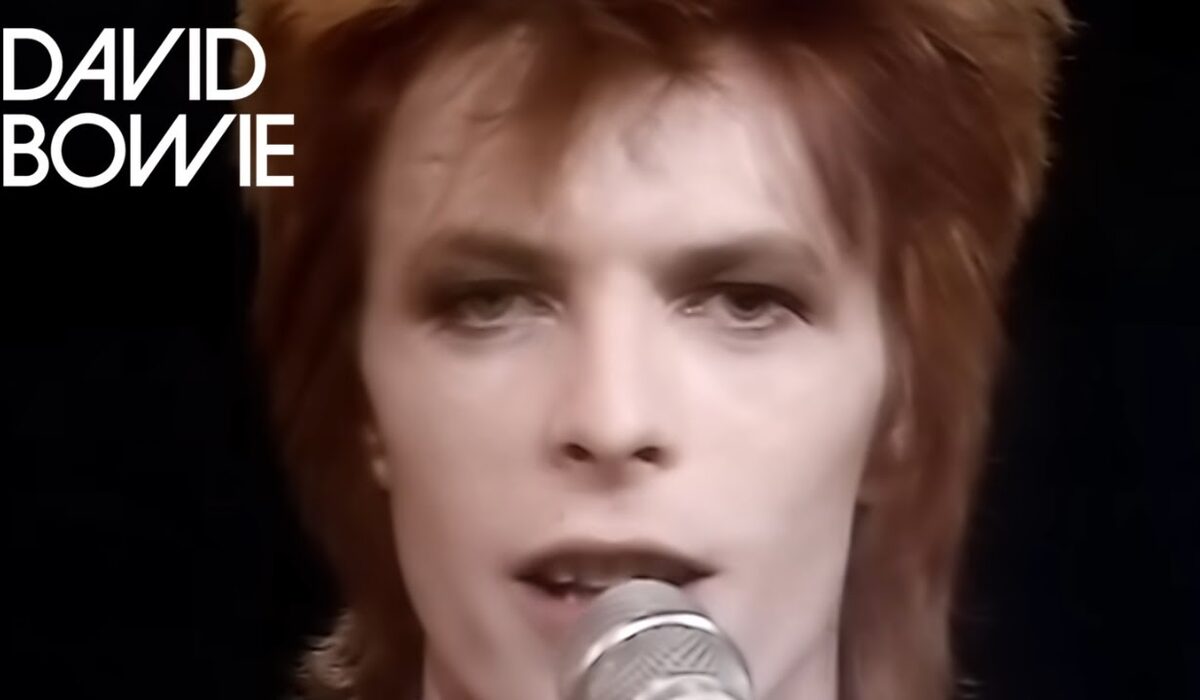
Starman remains the track that brought a mass audience into Ziggy. One TV night did much of the work, with one shared microphone and a chorus simple enough to survive decades of covers. The memory of that broadcast stays with the song. Put the album on and you still hear why daytime television could carry an alien messenger and keep the glam edge.
The chorus is the easy way in. Then the verse sets up the radio call. The song still works as an invitation, more than as a lecture on the concept. That is why the July 1972 clip still gets replayed when it resurfaces. Play the TOTP clip beside the album cut and the gap between them is still obvious.

Paulo | 12 October 2026
|
Not my usual lane but Starman got me. Fair enough. Coffee got cold while I finished the article. Acceptable.
Sara | 13 October 2026
|
Radio killed Starman for me for years. Came back last month. Instant regret for waiting. Also the comments section on old forums was wild about this.
François | 14 October 2026
|
i never knew that detail about the session. Changes how I hear the intro. Coffee got cold while I finished the article. Acceptable.
Priya | 14 October 2026
|
Kinda basic of me but Starman is still top 5 David Bowie for me. Might be recency bias but I do not care today. Needed that.
Marc G. | 15 October 2026
|
The production notes here made me replay Starman twice. Nice catch. Coffee got cold while I finished the article. Acceptable.
Mateo | 15 October 2026
|
Kinda basic of me but Starman is still top 5 David Bowie for me. Might be recency bias but I do not care today.
Yuki | 16 October 2026
|
I show Starman to friends who say they hate that era. Works every time.