




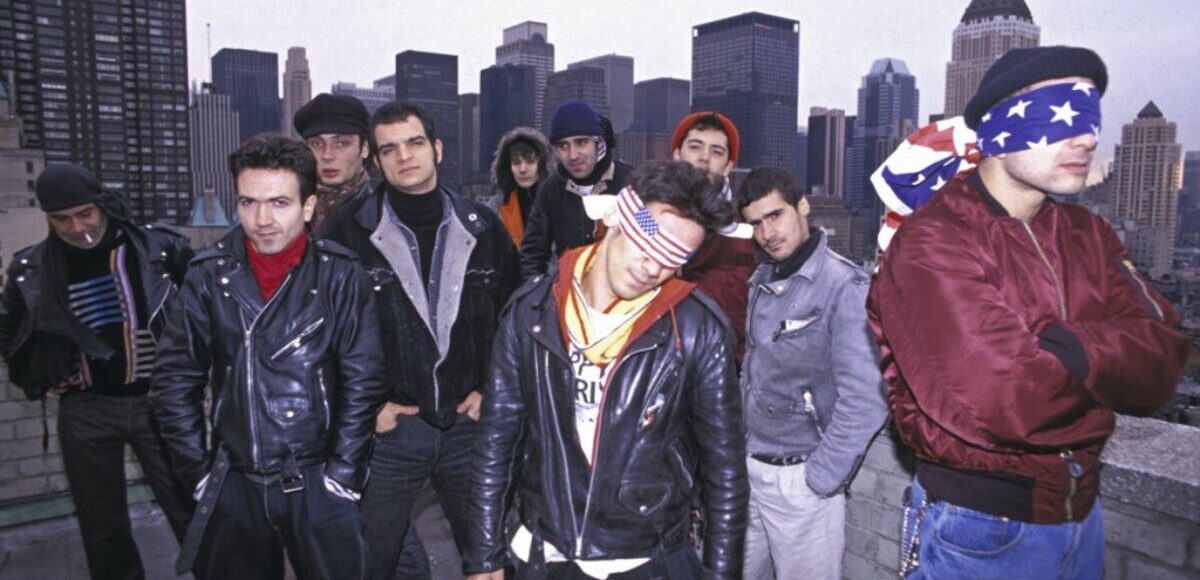
Sèvres, 1987: Manu Chao, Patchanka, then the South American train tour
Mano Negra formed in Paris in 1987, built around Manu Chao, born José-Manuel Thomas Arthur Chao in 1961 to a Spanish journalist father who had left Franco’s Spain, and raised in the Parisian suburb of Sèvres. The band’s core included his brother Antoine Chao on drums, Tom Darnal on guitar, Santiago Casas on bass, and a rotating ensemble of brass and keyboard players. The name came from an anarchist organization that had operated in Andalusia in the late nineteenth century. The songs kept that political signal audible.
Patchanka, their debut album released in 1988, gave a name to what they were doing. The word was their own coinage, a compound suggesting a hybrid of whatever was available. « Mala Vida, » the opening track and their most-played song, moved between Spanish and French within its two minutes and set the working method: fast, direct, several languages in one line, brass as punctuation, the rhythm section as the engine. The punk influence came from The Clash more than from any French source, though the musical palette was already wider than any British punk band had attempted.
Puta’s Fever (1989) and King of Bongo (1991) extended the catalog while the live reputation built in parallel. Mano Negra was among the first French bands to tour South America extensively, and they did it unconventionally: a 1992 Colombian and Brazilian train tour used old railway infrastructure as a moving concert stage, playing to communities along the route with no access to standard venue circuits. That tour stayed attached to the band’s name as firmly as any studio album. The shows ran from trucks and railway cars along the route.
Casa Babylon (1994), their final studio album, expanded the palette further: reggae, rai, Colombian vallenato, and rock coexisted across its tracks, recorded partly in Bogotá. By then the band was managing internal tensions. Manu Chao’s central role had always given Mano Negra a strongly authored quality, and as the mid-1990s continued the project felt less like a collective and more like a solo enterprise with rotating collaborators. The band dissolved in 1995.
Manu Chao spent the following years touring with a loose ensemble called Radio Bemba Sound System before releasing Clandestino in 1998 as a solo record. Clandestino carried the same multilingual format and the same rough, close sound as the Mano Negra albums, but in a quieter, more intimate register. The punk speed was gone. What remained was closer to acoustic street singing, finished carefully in the studio. It sold widely across Europe and South America and confirmed that the Mano Negra approach was attributable to Chao rather than to any specific collective configuration.
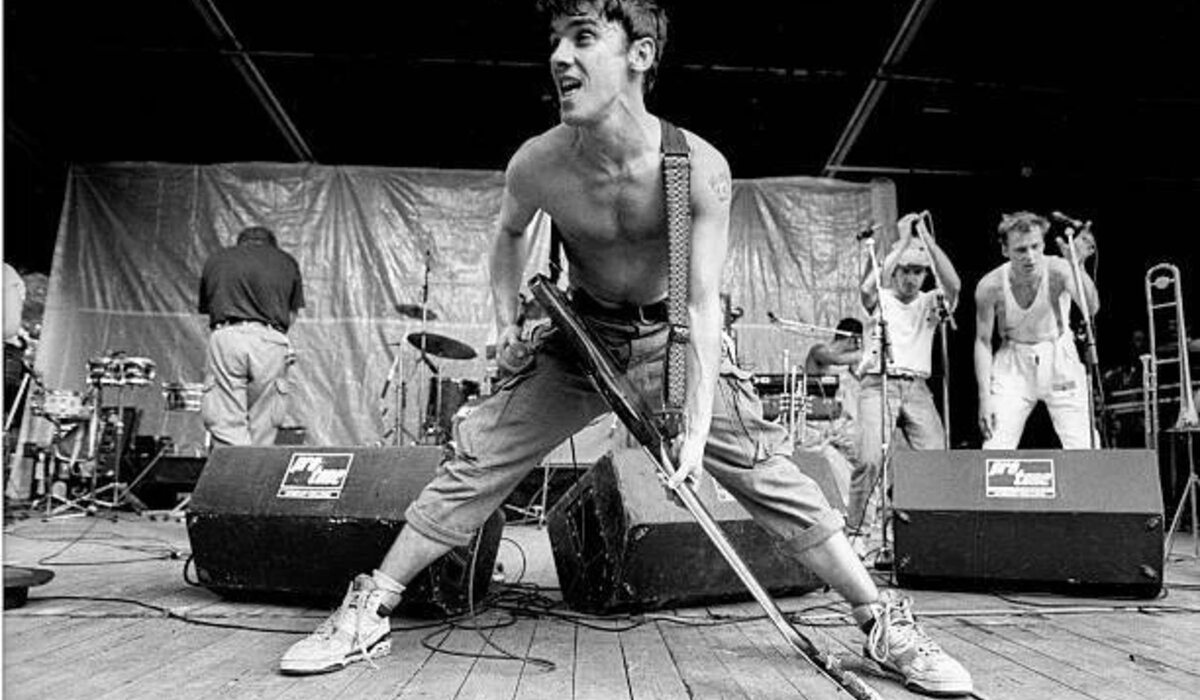
The influences are audible, and they are not sorted into a fixed order. The Clash supplied the punk structure and the political stance, and Joe Strummer’s vocal delivery is an obvious model for Chao’s own. Reggae and Caribbean rhythms offered an alternative to the standard European rock rhythm section on many tracks. Cumbia, salsa, and Colombian regional styles arrived through the South American touring experience and stayed in the arrangements. French chanson, the older line of engaged protest songs, sits underneath the records more often than it appears up front. The mix never settled into one consistent genre.
French rock groups of those years rarely matched Mano Negra’s range of languages or its political openness. French, Spanish, English, and Arabic appeared across the records at a time when the French music industry strongly favored French-only output. The usual comparison is The Clash. Mano Negra had less guitar-rock discipline and more interest in rhythm changes and instruments picked up outside Britain. Set next to later world-music fusion acts of the 1990s, these records were harder, faster, and more direct about politics.
The tempos are fast, and the volume stays inside a narrow band from verse to chorus. The brass section is used as a rhythm instrument as often as a melodic one. Bass and drums lock tightly together and carry the songs forward. Vocals sit close in the mix, without reverb. Chao’s voice is raw and slightly hoarse, delivered at live volume rather than with studio precision. The recordings stay about as rough as the songs require, without an extra coat of polish.
Start with Patchanka for the first statement of the band. King of Bongo covers the middle period, when the sound widened. « Mala Vida, » « King of Bongo, » and « Casa Babylon » cover the range of tempos and moods. For what came next, Manu Chao’s Clandestino offers the same approach in a quieter register. Partial live recordings and regional memory kept the South American tours in circulation. The European reputation has held steadily in the decades since the 1995 dissolution.


Hélène | 10 octobre 2026
|
Underrated catalog honestly. People only quote the obvious singles. Sharing this in the group chat. Expect chaos.
Louise | 10 octobre 2026
|
The chemistry talk is real. You hear it on the records.
Kofi | 11 octobre 2026
|
The lineup changes make more sense after reading this. Needed that.
Théo | 12 octobre 2026
|
Not perfect live every night, but when it clicks… yeah. I told my coworker and they shrugged. Their loss.
Priya | 13 octobre 2026
|
saw Mano Negra once. Messy, loud, worth it. This piece nails the vibe. Might be recency bias but I do not care today.
Marc G. | 14 octobre 2026
|
I like when writers talk players, not just myths. Good job here. Also the comments section on old forums was wild about this.
Diego | 14 octobre 2026
|
The lineup changes make more sense after reading this.
Paulo | 15 octobre 2026
|
Put on a random Mano Negra deep cut after this. Paid off. I told my coworker and they shrugged. Their loss.
Anne | 16 octobre 2026
|
Underrated catalog honestly. People only quote the obvious singles. Anyway.