




Two recordings joined in the middle, about a Liverpool garden
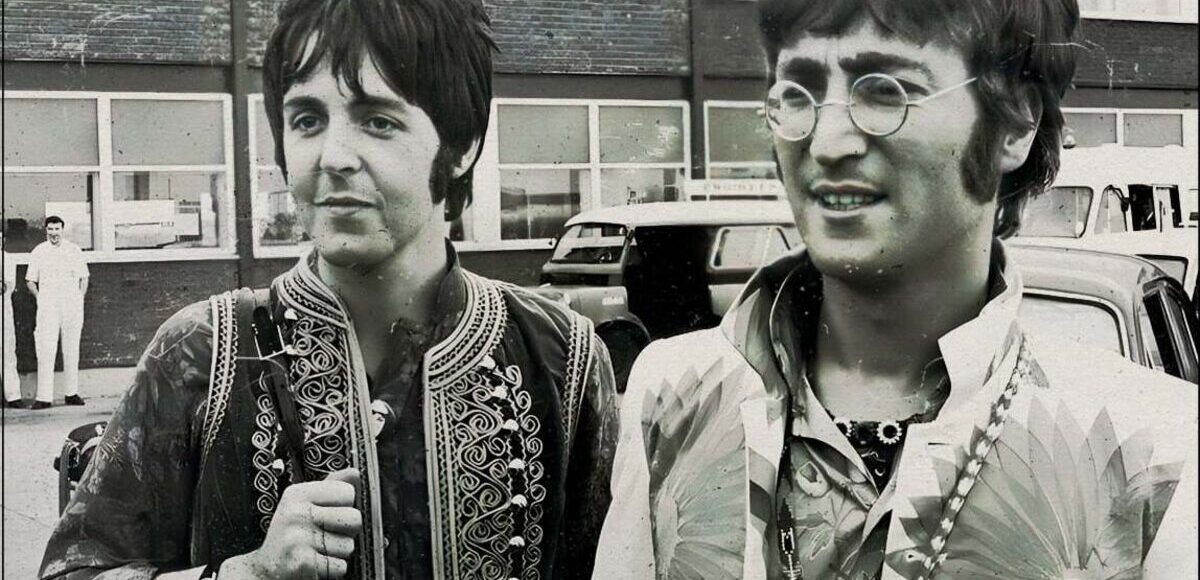
In the autumn of 1966 John Lennon was in Almería, in southern Spain, acting in Richard Lester’s film How I Won the War. Between scenes he wrote “Strawberry Fields Forever” on a guitar. The title was a place, not a dream he had invented for the studio. Strawberry Field was a Salvation Army children’s home in Woolton, Liverpool, a short walk from Aunt Mimi’s house on Menlove Avenue, where he had grown up. As a boy he climbed the wall and played in the grounds with Ivan Vaughan and his other friends.
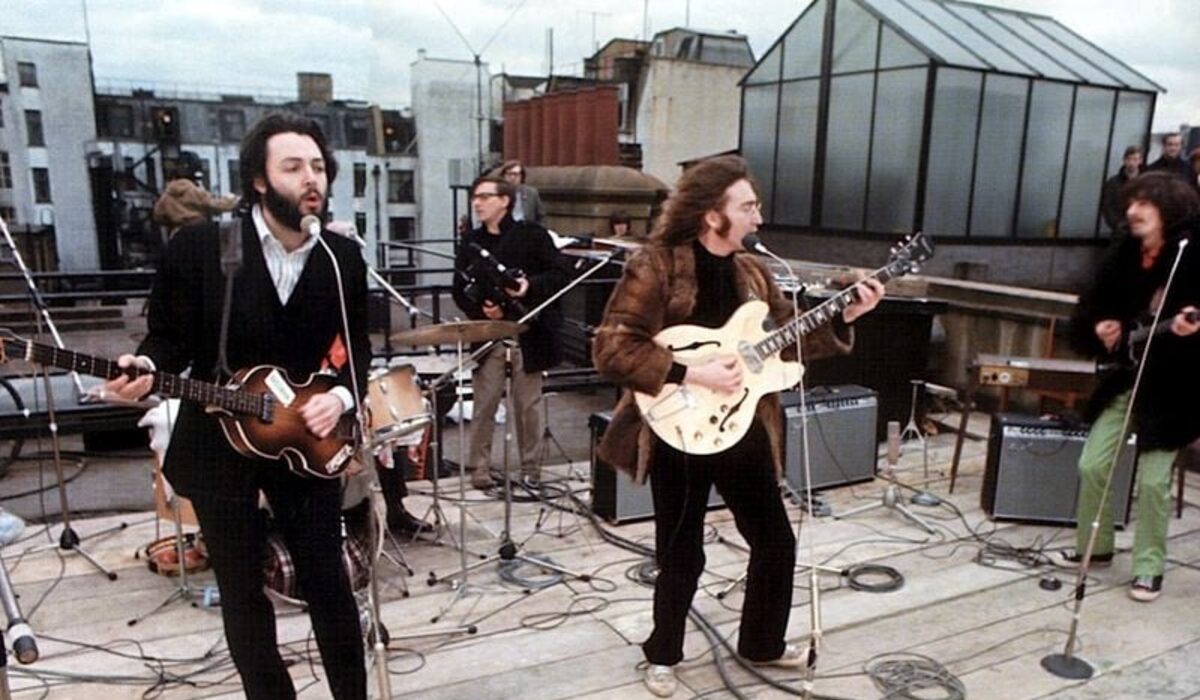
The Beatles recorded the song at EMI Studios, Abbey Road, between 24 November and 22 December 1966. George Martin produced and Geoff Emerick engineered. The first arrangement was slower. Paul McCartney played the Mellotron flute phrase that opens the record. Lennon then asked for a heavier version, with cellos and trumpets written by Martin. They ended with two finished recordings, in different keys and at different speeds.
Lennon liked the beginning of one and the rest of the other, and he asked Martin to join them. Emerick sped one tape up and slowed the other until the pitch matched, then joined the two together at about the one-minute mark. The join is still there if you listen for the drums: the sound of the kit changes under the vocal. Martin said afterwards that the speeds met more cleanly than he had expected.
The lyric stays inside that uncertainty. Lennon sings that living is easy with eyes closed, then that it is getting hard to be someone. He was not describing a drug manual. He was describing the gap between the boy in the Woolton garden and the man who had just stopped touring.
Strawberry Fields is a real place. After I stopped living at Penny Lane I moved in with my auntie, who lived in a nice semi-detached place. I used to go to the Salvation Army home to play.
(John Lennon, Playboy interview, 1980)
Parlophone released the song in Britain on 17 February 1967, as a single with two main sides, paired with “Penny Lane”. It reached No. 2. Engelbert Humperdinck’s “Release Me” kept it off the top. It was the first Beatles single to miss No. 1 in the UK since “Love Me Do” in 1962. Capitol issued it in the United States on 13 February 1967. There the single reached No. 1 on the Billboard chart, with “Penny Lane” listed as the lead side.
A short film was shot on 30 and 31 January 1967 at Knole Park in Sevenoaks, Kent. The director was Peter Goldmann, a Swede recommended by Klaus Voormann. The four of them run around a dead oak, the piano is outdoors, and parts of the picture run backwards. The song did not go on Sgt. Pepper’s Lonely Hearts Club Band, which came out on 1 June 1967, but the working method did. Two recordings forced into one, and a childhood address treated as if it were still a map.
Noah | 12 October 2026
|
Not my usual lane but Strawberry Fields Forever got me. Fair enough.
Ray | 12 October 2026
|
heard Strawberry Fields Forever a thousand times. This reminded me why it stuck. Also the comments section on old forums was wild about this.
Théo | 13 October 2026
|
Read this, then put Strawberry Fields Forever on loud. That was the move.
Dan | 14 October 2026
|
Heard Strawberry Fields Forever a thousand times. This reminded me why it stuck.
Jacques | 14 October 2026
|
My dad played The Beatles in the car. Strawberry Fields Forever is basically my childhood commute.
Lina | 15 October 2026
|
my dad played The Beatles in the car. Strawberry Fields Forever is basically my childhood commute. Coffee got cold while I finished the article. Acceptable.
Pierre | 15 October 2026
|
Opened the article, heard the riff in my head before the embed loaded. Classic. Sharing this in the group chat. Expect chaos.
Chloé | 16 October 2026
|
I show Strawberry Fields Forever to friends who say they hate that era. Works every time. Might be recency bias but I do not care today.