




A newspaper, an alarm clock, and forty players climbing
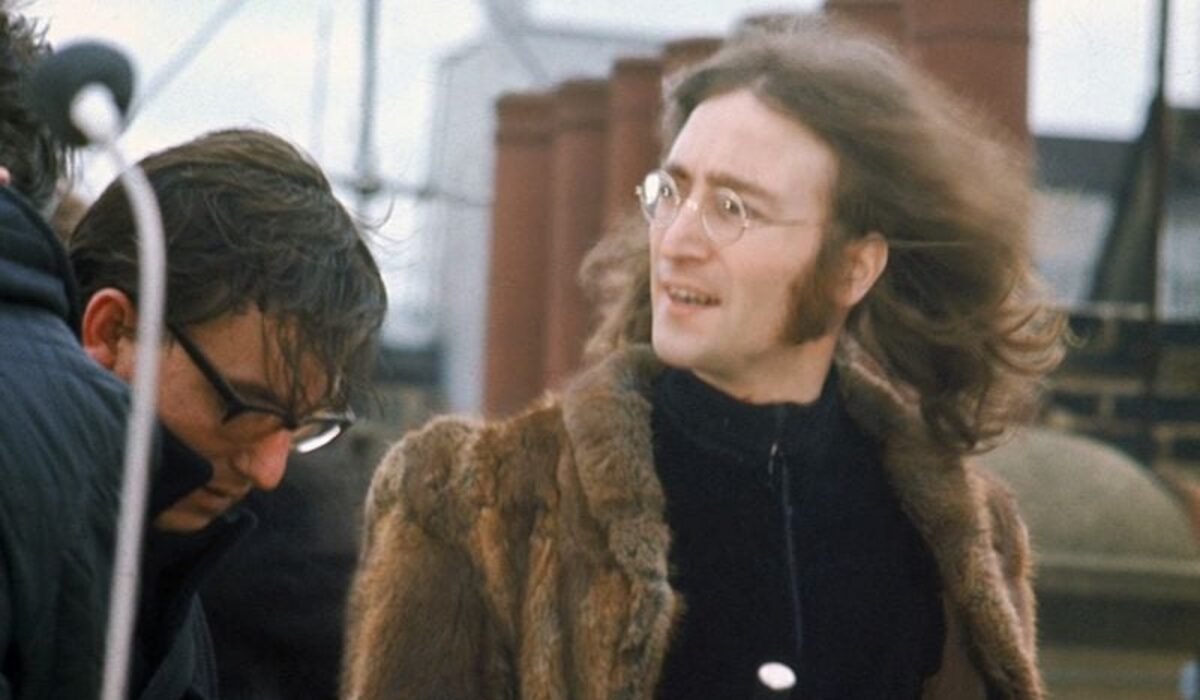
On 19 January 1967 John Lennon sat at a piano in EMI Studios, Abbey Road, with a copy of the Daily Mail in front of him. Two short items became the verses of “A Day in the Life”, the last song on Sgt. Pepper’s Lonely Hearts Club Band. One report described Tara Browne, the 21-year-old heir to part of the Guinness fortune, who had died on 18 December 1966 when his Lotus crashed in South Kensington. Lennon turned that into the line about a man who blew his mind out in a car. He said later he was not filing a news report. He was using the shock of the headline.
A small item about road repairs, four thousand holes in Blackburn, Lancashire, gave him the next verse. He counted the holes until the Albert Hall came into the line, because the name sang cleanly. Paul McCartney wrote the middle section, the one that starts “Woke up, fell out of bed”, from ordinary mornings, a bus, and a smoke. Between Lennon’s section and that middle the band left a gap of twenty-four bars.
Road manager Mal Evans counted those bars out loud on the tape, so the players would know where they were. He also set an alarm clock to mark the end of the gap. The ring was left in the recording. It goes off just as McCartney’s section starts. George Martin produced the sessions. Geoff Emerick engineered them. The basic track, with Lennon’s vocal and the acoustic guitar, was already down before anyone talked about an orchestra.
I was writing A Day in the Life with the Daily Mail propped in front of me. There was a paragraph about four thousand holes in Blackburn, Lancashire, and there was a story about a Guinness heir who died in a car crash.
(John Lennon, The Beatles Anthology)
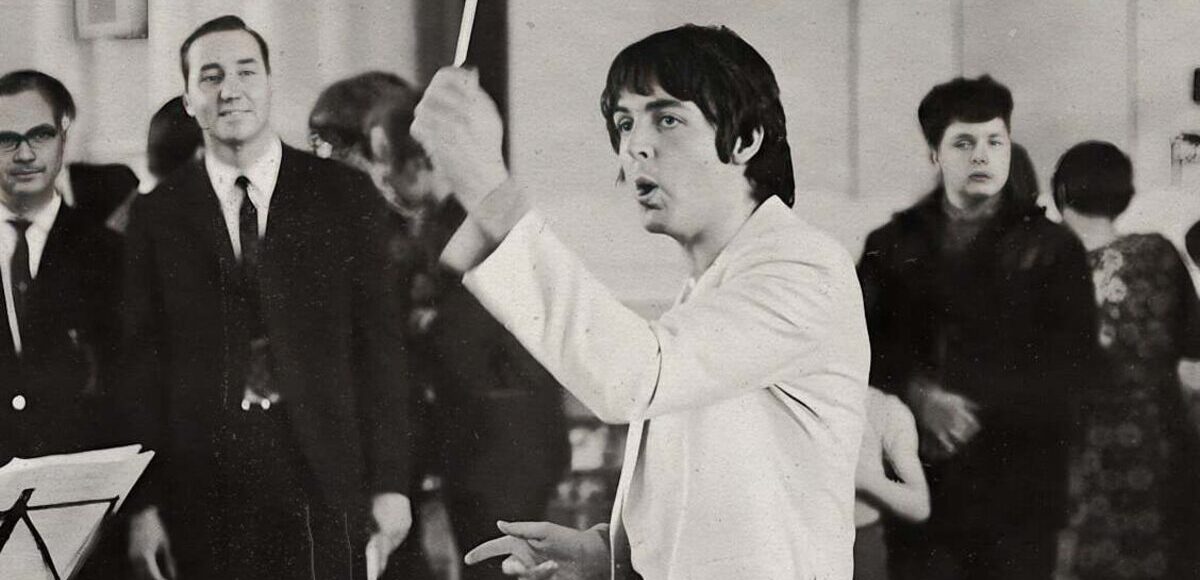
On 10 February 1967, forty musicians from London orchestras came into Studio One in evening dress, because the band had asked them to wear it. Martin told each player to start on the lowest note the instrument could manage and to climb to the highest over those twenty-four bars. Nobody was given the notes in between. Each player chose the route. Martin conducted. McCartney conducted as well, from a podium, in a white suit. A second climb was recorded for the end of the song.
The final chord is an E major struck at the same time on several pianos and a harmonium by Lennon, McCartney, Ringo Starr, Martin and Evans. Emerick turned the volume up slowly as the sound died, so the chord seems to last longer than a piano can hold. Sgt. Pepper’s Lonely Hearts Club Band was released in Britain on 1 June 1967. The BBC would not play “A Day in the Life” on the radio. The line they cited was “I’d love to turn you on.” The rest of the album could be heard. The last song, the one built from a newspaper, a counted gap and forty people climbing, stayed off the air.

Ivan | 8 October 2026
|
My dad played The Beatles in the car. A Day In The Life is basically my childhood commute.
Sofi | 9 October 2026
|
I came for The Beatles, stayed for how clean this write-up is. A Day In The Life hits different after reading. Needed that.
Ray | 9 October 2026
|
Heard A Day In The Life a thousand times. This reminded me why it stuck. Just saying.
Noah | 10 October 2026
|
I came for The Beatles, stayed for how clean this write-up is. A Day In The Life hits different after reading. Also the comments section on old forums was wild about this.
Fatima | 10 October 2026
|
I argued with my brother about A Day In The Life for years. This is my exhibit A. Anyway.
Chloé | 12 October 2026
|
i show A Day In The Life to friends who say they hate that era. Works every time. Coffee got cold while I finished the article. Acceptable.
Maya | 12 October 2026
|
this is the track I put on to test new speakers. The Beatles never lies. Also the comments section on old forums was wild about this.
Théo | 12 October 2026
|
I came for The Beatles, stayed for how clean this write-up is. A Day In The Life hits different after reading. I am biased and fine with it.
Inés | 13 October 2026
|
Same. Glad I am not alone on that.
Ben | 14 October 2026
|
This is the track I put on to test new speakers. The Beatles never lies.
Jules M. | 15 October 2026
|
Solid chronicle. I forgot how sharp The Beatles sounded on this one.
Pierre | 15 October 2026
|
This is the track I put on to test new speakers. The Beatles never lies. Fight me.