
A girl who wrote her own weather
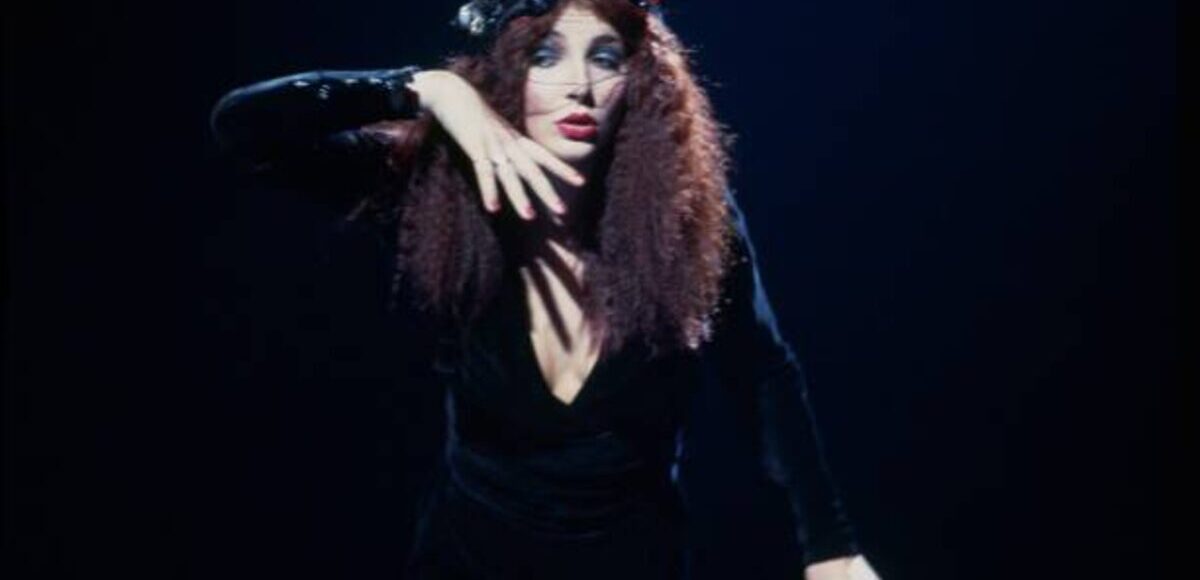
In January 1978 a nineteen-year-old from Bexleyheath put a ghost story at number one in Britain, and she had written every line of it. Wuthering Heights does not behave like a debut single. The voice arrives from somewhere above the lyric, Cathy calling through a window that pop radio was not built to open. Catherine Bush, born on 30 July 1958, had been writing in her bedroom for years. David Gilmour heard a tape, helped her into a studio, and EMI signed her while she was still a teenager. She waited. She did not want the first record to be a rush.
The Kick Inside came out in 1978 and made the wait look like a method. The Man with the Child in His Eyes, written when she was thirteen, sits beside songs that already know how a piano can stage a scene. Lionheart followed too quickly, by the label’s clock. She answered by taking the next records under her own direction. Never for Ever in 1980, with Babooshka and Army Dreamers, was the first album by a British woman to enter the UK chart at number one. The Dreaming in 1982 is the one that frightens the polite version of her story: Fairlight sampler, Australian landscape, a didgeridoo, a voice pushed until it frays. She produced it. The label did not love the bill. The record is still the sound of a songwriter refusing the middle of the road she had just been offered.
Then Hounds of Love, September 1985, splits in two and both halves hold. Side one is the set of songs a stadium could almost understand: Running Up That Hill, Hounds of Love, Cloudbusting. Side two, The Ninth Wave, is a drowning told in chapters, radio voices, a helicopter, a woman talking to herself under ice. The drum machine is not cold. It is weather. She built the album at her home studio, and the domestic detail matters: the biggest British pop record of that year was made where she could stop, rewrite, and keep the strange parts in.
She did not become a touring animal to match the sales. The Tour of Life in 1979, with its dancers, mime, and costume changes, was the show. Then she stopped going out. The Sensual World in 1989 and The Red Shoes in 1993 keep the theatrical ear, Molly Bloom at the edge of one song, a pair of cursed shoes in another. After that, twelve years of near silence. When Aerial arrived in 2005 it was a double album about daylight, birds, and a washing machine, which is to say about attention. 50 Words for Snow in 2011 slows the tempo until a song can last as long as weather.
In 2014 she returned to the stage for Before the Dawn, twenty-two nights at the Hammersmith Apollo, the first full shows since 1979. No phones in the early plan, a band that included her son, the Ninth Wave staged rather than summarised. She did not turn the residency into a world tour. In 2022 Running Up That Hill re-entered the chart because a television series needed a song about a bargain with fate, and a new audience discovered that the bargain had been written in 1985, in a house, by a woman who already knew what the lyric was worth.
The cult of Kate Bush is sometimes told as eccentricity: the high note, the videos, the absence. The work says something plainer. She treated pop as a theatre she could write, direct, and leave. The voice is the set. The silence between albums is part of the staging. Nothing in that career kneels to the calendar.