

Gibus Club, Conny Plank, Visconti, Marcia Baïla
At the Gibus Club in 1980, a dancer’s name and a guitarist’s scratch argued their way into French pop history. Catherine Ringer and Fred Chichin first performed as Rita Mitsouko, then as Les Rita Mitsouko, a duo that treated Paris like a studio and a stage at once: Chichin’s wiry guitar and machines, Ringer’s voice shifting from cabaret grit to avant-garde yelp without asking permission.
The debut Rita Mitsouko arrived in 1984, produced with Conny Plank. “Marcia Baïla” climbed to number two in France, a tribute to dancer Marcia Moretto that became a national dancefloor ritual, Mondino’s images locking the pair into visual myth. The No Comprendo (1986), with Tony Visconti, pushed further: “C’est comme ça”, “Andy”, pop that refused to sand down its edges. Marc & Robert (1988) brought Sparks onto “Singing in the Shower”, a transatlantic wink that US dance radio noticed.
They were glamorous and abrasive in the same bar. Ringer could look like a star and sound like a riot. Chichin could write hooks that felt scratched, as if the melody had been dragged across concrete and somehow stayed catchy. Système D (1993) welcomed Iggy Pop on “My Love Is Bad”. Cool Frénésie (2000), La Femme Trombone (2002), Variéty (2007) kept the door open into the new century, French charts still making room for their nervous elegance.
Listen for Ringer’s voice sliding from cabaret growl to yelp without warning, Chichin’s guitar treated like a percussion desk, and production that keeps Paris club air in the mix. Conny Plank’s European precision and Tony Visconti’s glam discipline gave different albums different rooms, but the duo’s friction stayed constant. Compared with polished French synth-pop or polite chanson, Les Rita Mitsouko sounded like a rehearsal that refused to leave the stage.
Live, they were a two-person theatre company with amplifiers. Festival stages and television studios bent around Ringer’s physical comedy and Chichin’s deadpan focus. The videos, often with Mondino’s eye, treated identity as collage: clothes, gestures, city light. Their catalogue never settled into one genre alcove. New wave, funk, rock, chanson-adjacent theatre, all under one scratched signature.
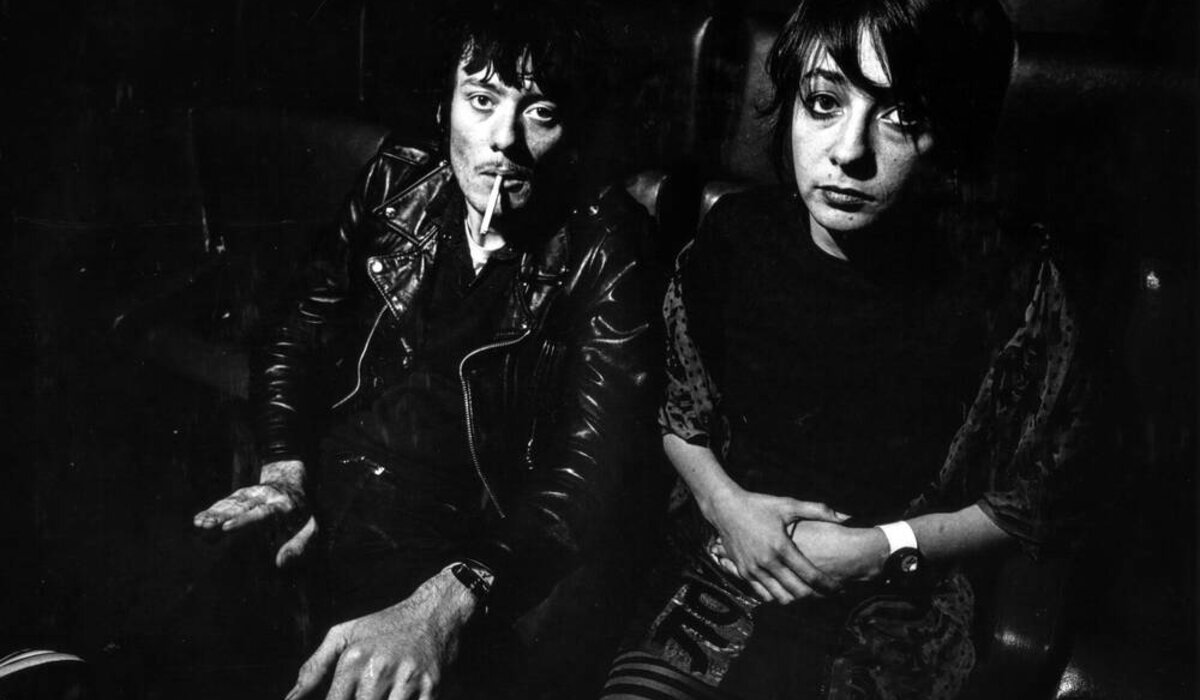
Fred Chichin died in 2007. The silence afterward was part of the story. Ringer continued, carrying the repertoire like a living archive, proof that a duo’s chemistry can outlast the months of a chart run. What they left was not a museum of singles but a method: take Paris nervousness, plug it into a guitar, let a voice refuse politeness, and watch the dancefloor invent its own etiquette.
French pop in the eighties had plenty of polish. Les Rita Mitsouko preferred friction. They let funk basslines argue with punk timing, let synthesizers sit next to guitar scratch, let Ringer’s theatrical body rewrite what a frontwoman was allowed to do on French television. The result was not niche for long. Hits made the friction public. Kids danced to songs that still sounded like they might bite. Critics heard Conny Plank and Tony Visconti and heard Europe talking to itself through a Parisian duo. Listeners heard something simpler and stranger: two people inventing a private language that somehow filled stadiums of memory.
Play “Marcia Baïla” or “C’est comme ça” and the facts still hold: Ringer’s theatre, Chichin’s wiry guitar, a Paris duo that made impatience danceable. Les Rita Mitsouko did not soften French pop. They gave it friction and a melody you could not sand smooth.
Two artists, one city, a guitar scratch that became a signature sound.
After Chichin’s death in 2007, every reprise of “Marcia Baïla” carried celebration and absence in the same chorus. That double feeling fits the duo’s design: joy written with a scratch that was never an accident.
Their name began as a joke that stuck: Mitsouko perfume, Rita as character, a duo inventing itself as a small theatre company with guitars.