
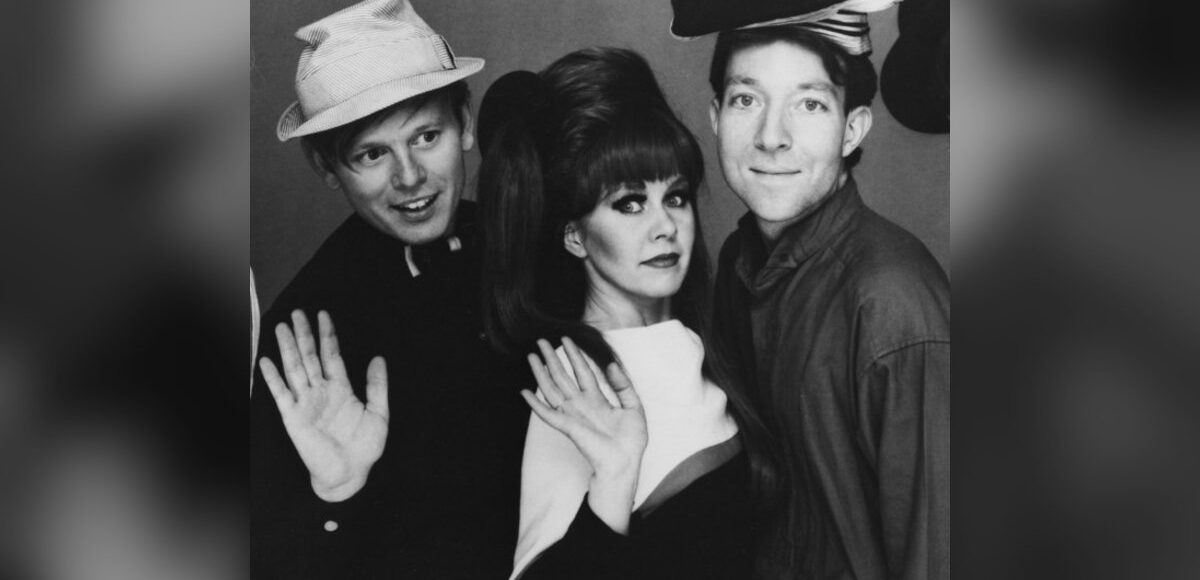
Athens thrift stores, Farfisa, and Rock Lobster
The B-52’s came out of a Chinese restaurant in Athens, Georgia, in December 1976. Fred Schneider, Kate Pierson, Cindy Wilson, Ricky Wilson, and Keith Strickland had been out for dinner, ended up at somebody’s apartment, and played through covers and originals until a band existed. The first proper show was on Valentine’s Day 1977, at a house party. Athens was not yet the music town it would become when R.E.M. and Pylon arrived soon after; the B-52’s made it one.
The lineup split the work precisely. Schneider barked and declaimed rather than sang, delivering surreal inventories over whatever was happening rhythmically. Pierson and Cindy Wilson stacked harmonies in a high, cartoonish style borrowed partly from girl groups and partly from science fiction. Ricky Wilson’s guitar avoided standard chord shapes in favour of open tunings and truncated patterns that gave the music a jittery, forward-moving energy. Strickland’s drumming was compact and dry. The Farfisa organ, cheap and slightly out of place, tied it together: absolutely the right instrument for the wrong reason.
The debut The B-52’s (1979) on Warner Bros delivered “Rock Lobster”, “Planet Claire”, and “52 Girls” to a world that had not asked for them but needed them immediately. “Rock Lobster” in particular built for eight minutes out of a surf beat, call-and-response yelps, and an inventory of sea creatures, somehow producing a dancefloor situation at every turn. College radio and downtown clubs made the record a reference point. John Lennon reportedly heard it in Bermuda in 1980 and felt re-energised by its loose party energy, one of the more vivid stories attached to the band.
Wild Planet (1980) followed without losing momentum. “Private Idaho” kept the cartoon menace; “Quiche Lorraine” doubled down on the absurdism. Whammy! (1983) pushed toward a harder electronic edge with production from David Wolinski. Bouncing off the Satellites (1986) was recorded under the shadow of Ricky Wilson’s declining health: he had been diagnosed with AIDS, though the cause was not publicly confirmed at the time. He died in October 1985, aged thirty-two, before the album was completed.
The band nearly stopped. Ricky Wilson had been both the lead guitarist and Cindy’s brother; his absence was not something a group simply worked around. They took time, toured modestly, and eventually decided the answer was another record. Strickland moved to guitar and additional composition duties. The chemistry changed but held.
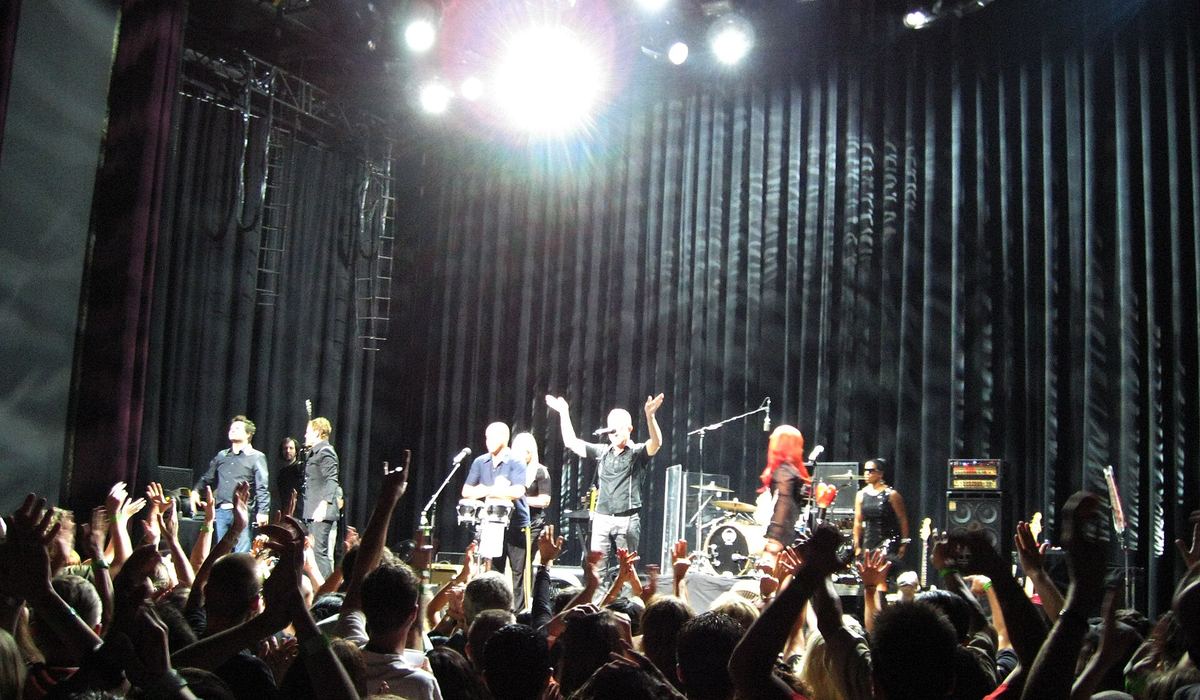
Cosmic Thing (1989), produced with Nile Rodgers on several tracks and Don Was on others, turned the corner. “Love Shack” became the kind of song that arrives in a culture and simply stays: its spoken-and-sung build, the tin roof line, the call and response between Schneider and Pierson and Wilson, worked at a house party, a wedding, and a stadium with equal conviction. “Roam” and “Deadbeat Club” rounded out a record that matched the band’s surreal instincts with cleaner production and wider reach. The album eventually sold over five million copies worldwide.
Good Stuff (1992) maintained the momentum, though it was clear that Cosmic Thing had been an exceptional alignment of band and moment. Funplex (2008), the last studio album, showed the B-52’s could still make something contemporary without pretending to be younger than they were. Tours kept bringing audiences back for the Cosmic Thing set, and the band proved that kitsch, properly handled, does not age the same way earnest rock does.
The B-52’s are not Talking Heads, who wore the same art-rock downtown energy as something more conceptual and literary. They are not Devo, who used surrealism as cultural critique. The B-52’s used nonsense as entertainment and treated the dancefloor as the correct response to everything. The camp was the product; the professional timing was the craft. They wrote songs where the joke was the form, not a decoration on it.
Start with the 1979 debut for “Rock Lobster” and “Planet Claire”, then move to Cosmic Thing for “Love Shack” and the full version of the band with wider appeal. Wild Planet fills the gap between the two. The Athens scene they helped build, alongside R.E.M. and Pylon, turned a mid-sized Georgia college town into one of the key American music scenes of the 1980s. The B-52’s did it by refusing to take either the music or the fashion seriously, which turned out to be the most serious thing they could have done.