
From Tryon to Carnegie, via Mississippi Goddam
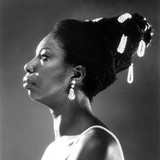
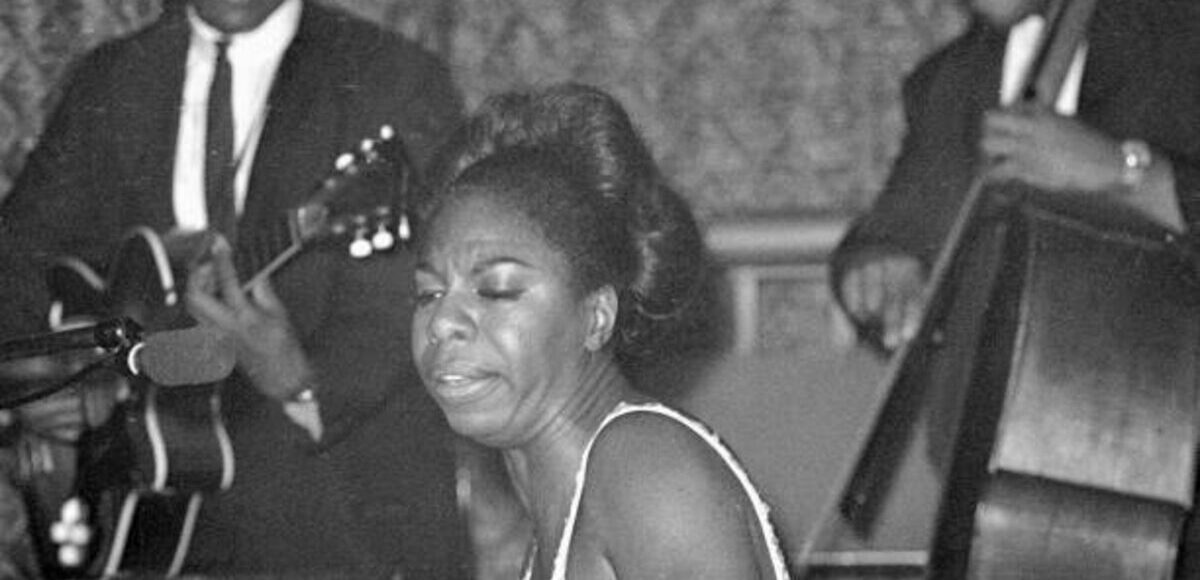
At Annie’s Room in Soho, June 1965, Nina Simone’s left hand does not soft-pedal under the voice. It pushes back. Eyes shut, she leans into a phrase while the club wall sits behind her like an audience she never asked to please. Eunice Kathleen Waymon was born in Tryon, North Carolina, on 21 February 1933. She renamed herself in Atlantic City so her Methodist mother would not hear that the church prodigy was singing in bars. The town had raised money for a classical future. The Curtis Institute of Music turned her away. What she kept was a left hand trained on Bach and a voice that refused to make any room comfortable.
Her first album, Little Girl Blue, came out on Bethlehem in 1958, cut fast and sold without her approval. “I Loves You, Porgy” still reached the charts, a Gershwin aria slowed until it read like a private letter. Colpix, then Philips, then RCA kept asking for a smoother product. She answered with “My Baby Just Cares for Me”, “Don’t Let Me Be Misunderstood”, and, on the 1965 album I Put a Spell on You, the low announcement of “Feeling Good”. The horns do not cheer. They state a fact. Under them the voice sits almost spoken, checking freedom rather than selling it.
Politics was not a later costume. It was already in the timing. After the murder of Medgar Evers and the Birmingham church bombing, she wrote “Mississippi Goddam” in a rush of anger, then sang it on Nina Simone in Concert in 1964, telling the room the show tune in front of them was not a show tune. The chorus smiles, then bites. “Four Women”, from Wild Is the Wind in 1966, puts four lives in one melody and refuses a favourite. “Sinnerman” turns a spiritual into a chase: piano, clapping, a cry that runs until the band is out of breath. These were not side projects next to supper-club work. They were the work.
By the end of the decade the American stage was a place she entered ready for a fight. “To Be Young, Gifted and Black”, written with Weldon Irvine and released in 1970, was a gift to Lorraine Hansberry and a correction to every song that told Black listeners to wait. She played Carnegie Hall. She played the Selma to Montgomery march. She also played rooms where the contract, the money or the promoter insulted her, and she said so, sometimes by stopping the music. The “difficult” label is the label of a musician already told, by a conservatory and by a country, that her standard was not the one in force.

Europe took her in without sanding the edges. There were years in Liberia, in Switzerland, then in the south of France. The 1976 set at Montreux is still a document: a singer who can quiet a festival with one held note, then laugh at the quiet. She recorded when she chose. She cancelled when she did not. The catalogue from those years is uneven on purpose. She was not building a brand. She was keeping a practice: classical touch against gospel time, cabaret irony against sermon.
Younger players kept finding her. A sample, a film cue, a nightclub pianist trying “Feeling Good” and learning the song will not be prettied up. The 1987 British hit of “My Baby Just Cares for Me”, revived by a Chanel No. 5 ad, sent a 1958 track back up the chart and did not make her suddenly agreeable. She still played as if the piano owed her better treatment. In 2003 Curtis, late by half a century, offered an honorary diploma. She died days later, on 21 April, in Carry-le-Rouet.
What lasts is not the myth of the difficult genius, a lazy file for a woman who would not lower her volume. What lasts is a trained hand that would not kneel, and a voice that could make a standard feel like evidence. Put on “Mississippi Goddam” or the long run of “Sinnerman” and the room still changes. The demand was hers. It has not been withdrawn.