
1920s flute blues into AM escape
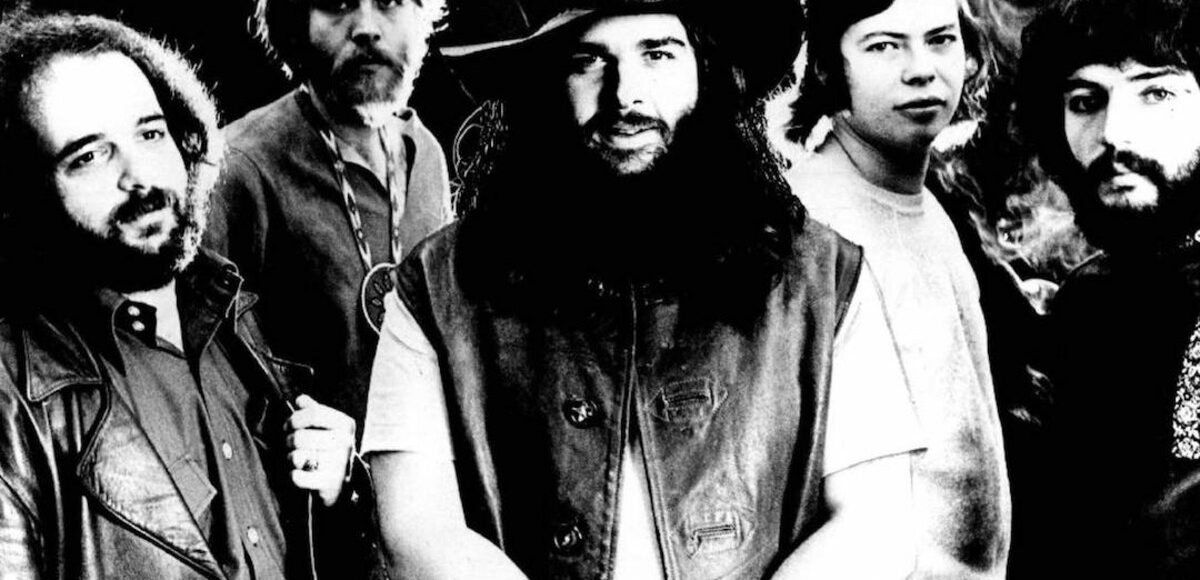
Going Up the Country starts with Jim Horn’s flute and a rolling rhythm before Alan “Blind Owl” Wilson’s falsetto enters. Wilson adapted the melody from Henry Thomas’s 1920s “Bull Doze Blues,” keeping the wooden-flute flavor instead of psychedelic gloss. Canned Heat, the Los Angeles blues-boogie band, cut it for the 1968 album Living the Blues on Liberty Records. Bob “The Bear” Hite’s growl sits elsewhere in their catalog; here Wilson’s lighter voice carries the travel lyric about leaving town for quieter ground.
Wilson studied old country blues and bird calls as carefully as club gigs. The arrangement stays loose but locked: dusty drums, simple changes, flute on top. Through 1968–69 the single rode AM radio from West Coast stations to festival crowds. Draft-age listeners heard an escape song; documentary crews later used it as ready-made road montage. Robin Lloyd and others called it an unofficial anthem of Woodstock 1969, where Canned Heat also played. A plain urge to leave town hit harder that year than another protest slogan.
Onstage the band could sprawl into long boogie jams. This single is their clearest short statement: flute hook, two-chord drive, radio length. Decades later it still turns up in commercials, films, and classic-rock playlists because the opening figure is instant. No concept-album frame. Just a borrowed rural melody, a California blues band, and a dashboard-ready wish to get out.
Some consider it the unofficial anthem of 1969’s Woodstock gathering.
(Robin Lloyd, KNKX, 2012)

Wilson died in 1970, Hite in 1981. Going Up the Country outlived both as the entry point for new listeners. Play it next to Thomas’s original and the lineage is obvious. Play it next to late-60s AM hits and you hear why programmers grabbed it: short, melodic, easy to picture on an open highway. Heritage rock did not invent that use; the record invited it from the first spin.
What lasts is the craft choice: keep the flute, keep the shuffle, keep the lyric plain. America-leaving-town songs are common. Few bridge 1920s Texas street music to a 1968 Liberty single this cleanly. That bridge, not a vague “sixties spirit,” is the concrete legacy still selling the idea of packing a bag and going.