From “Alors on danse” to Racine Carrée: electronic pop with concrete stories
Paul Van Haver was born in Brussels in 1985. His Rwandan father died during the genocide in 1994, when Paul was nine. That family history did not surface directly in the music at first; what it produced instead was a work ethic that treated every song as something that needed to be finished and every stage performance as something that needed to earn its space. He studied sound and music production in Brussels and released early demos as Stromae, a verlan inversion of the French word maestro.
“Alors on danse” (2009) was deceptively simple: a loop-driven, kick-drum-forward track about the treadmill of early adult life, work, debt, love, and loss, listed in a single verse with the precision of a grocery receipt. Belgian radio picked it up. France followed. The track crossed into European clubs and the chart numbers built from there. Kanye West tweeted about it. American press noticed. Stromae gave his first major press round while still working a day job in Brussels.
Cheese (2010), his debut album, set the production standard: clean synthesis, precise rhythm programming, vocals in the front of the mix without any reverb cushion between the singer and the listener. The influences were visible and unashamed: house architecture from Chicago and Detroit, hip-hop verse structures, French chanson’s lyric precision, and Jacques Brel’s way of landing a syllable on a beat. Justice’s compressed synthesis appeared in the processing. Stromae did not hide the sources. He assembled them quickly and kept them French.
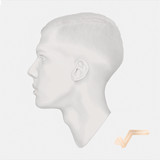
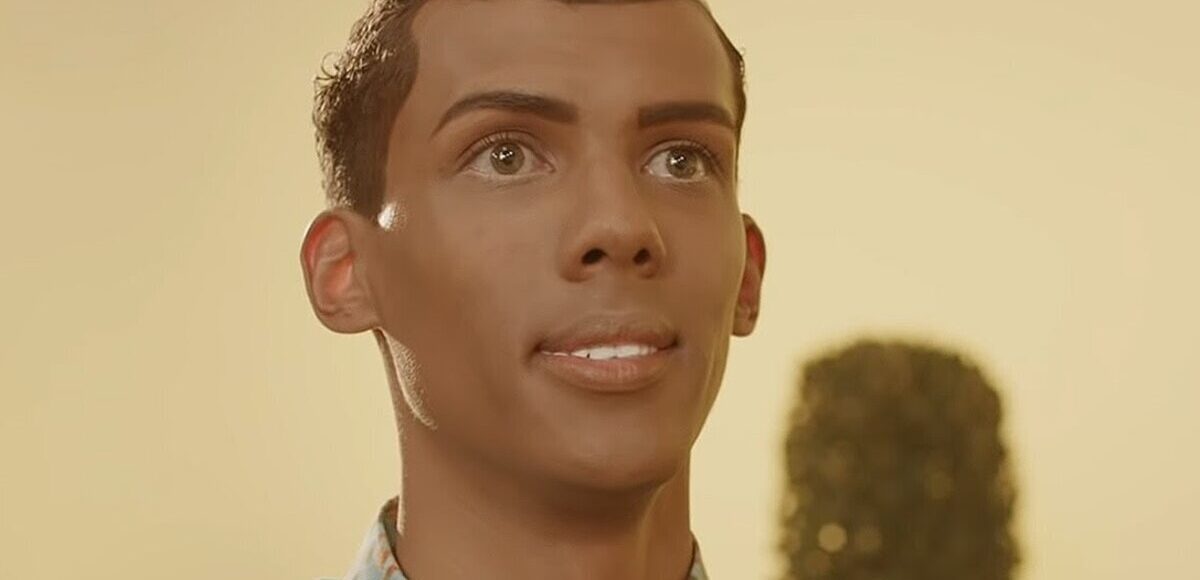
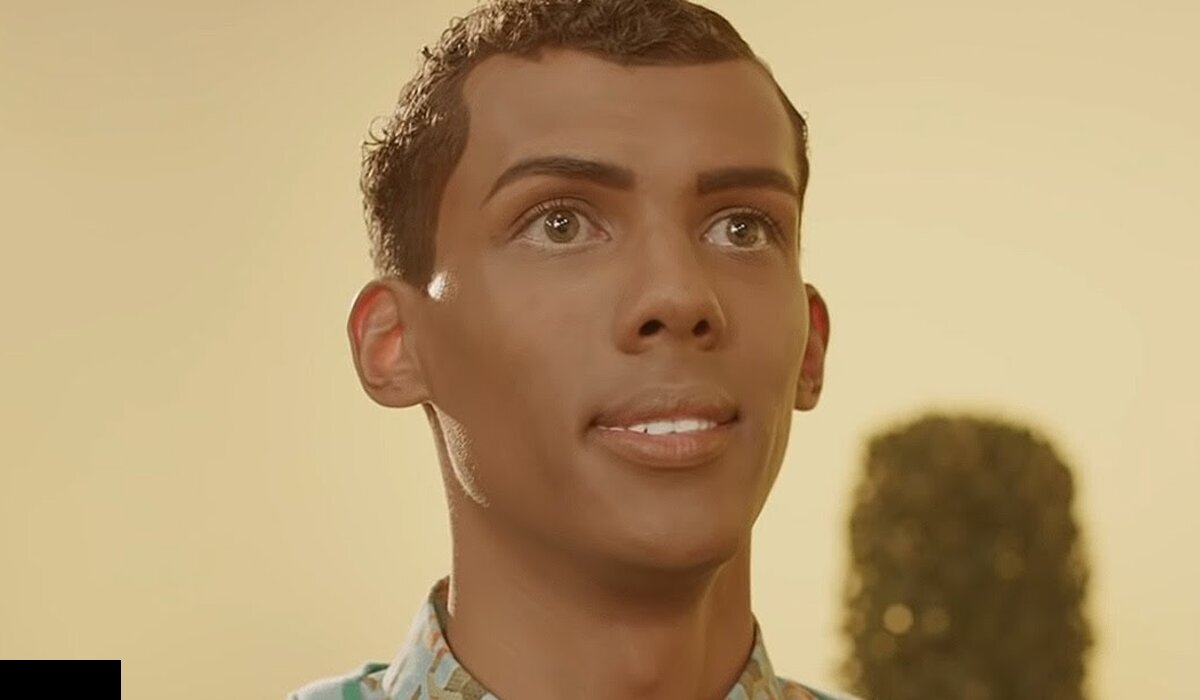
Racine Carrée (2013) is the work that defines the catalogue. “Papaoutai” addressed absent fathers through a video built around mannequin parents and a restless child moving through a pastel suburb, a clip that ran to over three hundred million views and became a visual reference point in European pop. “Formidable” was filmed in a single handheld take on a Brussels street, Stromae appearing disheveled and apparently drunk in public. “Tous les mêmes” used a split-screen lyric structure to address a relationship argument from both sides simultaneously. The album reached number one in France, Belgium, and Switzerland.
Mosaert, the creative house he built with artistic director Luc Junior Tam and stylist Coralie Barbier, kept clothes, video direction, typography, and visual identity as coherent as the mixes. The choreography on stage was angular and precise: grey suits, minimal props, lighting that supported the arrangements rather than competing with them. Concert productions at festivals across Europe, Africa, and the Americas confirmed that the songs worked at scale without requiring spectacle.
A health crisis linked to a reaction to an anti-malaria medication halted the touring cycle in 2015. Stromae spoke about it in public interviews and then went largely quiet for several years. Multitude (2022) returned with “L’enfer,” which addressed suicidal ideation directly, and with quieter arrangements that sat alongside electronic frameworks without abandoning them. The syllable craft was unchanged. The production range had widened.
Throughout the career, Stromae wrote and released in French. When promoters raised the question of English crossover, he declined. The decision is audible in the work: the rhythms carry French naturally because the cadences of the language were built into the composition, not added afterward. The wordplay, which depends on syllable weight, homophony, and rhyme schemes specific to French, would not produce equivalent effects in translation. He exported the rhythm and kept the language.
Entry points: start with “Alors on danse” for the blueprint in three minutes, then Racine Carrée in full, which runs thirty-nine minutes and benefits from a continuous listen on headphones. Multitude for the post-break work with its different register. Comparable names: Benjamin Clementine for lyrical density in a European language, Christine and the Queens for electronic pop with visual rigour. What separates Stromae is structural efficiency: every element in a production has a function, and the drops arrive because the verses prepared them.
Paul Van Haver built a career that resists clean genre classification: not chanson, not club, not hip-hop, though all three are in the DNA. What stays across the work is the economy. Every Stromae song earns its length. The lyric tells you something specific, and the beat makes sure you feel it before you understand it.