
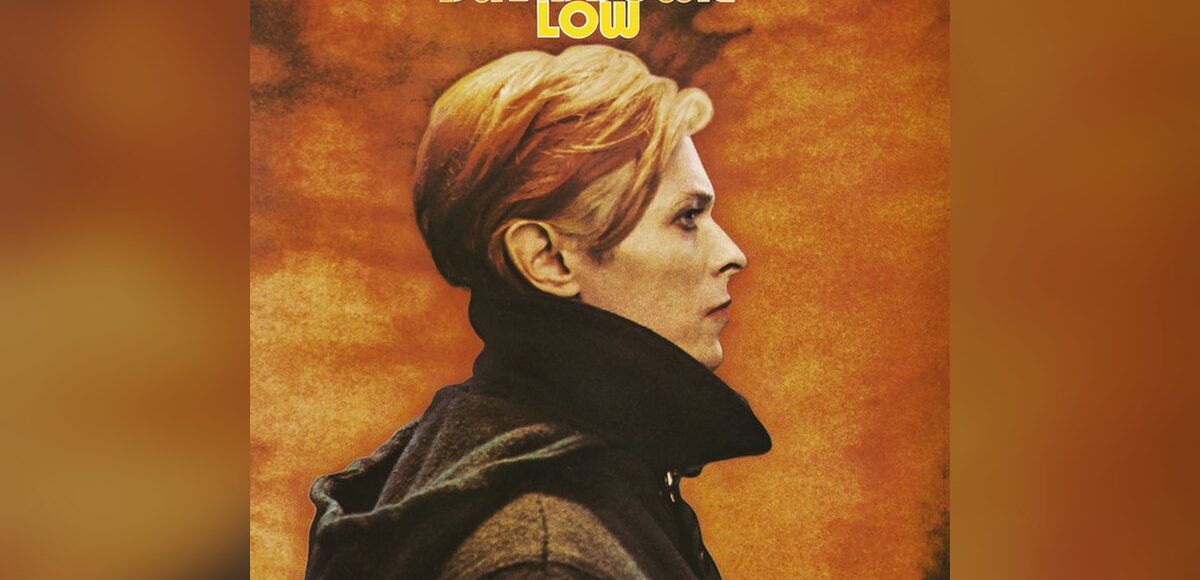
First Berlin fragment, Visconti and Eno
In January 1977 RCA released Low, the first Berlin-trilogy album, cut with Tony Visconti and Brian Eno after the Station to Station tour exhaustion. Basic tracks started at the Château d’Hérouville in France; work continued in West Berlin at Hansa. The split is audible on the finished LP: side one is short songs, side two is mostly instrumentals. Carlos Alomar, George Murray, and Dennis Davis remain the rhythm core while Eno opens empty space with treatments and synths.
« Speed of Life » opens as an instrumental with a bright synth line before any vocal arrives. « Breaking Glass, » « What in the World, » « Sound and Vision, » « Always Crashing in the Same Car, » and « Be My Wife » keep vocals sparse and mixes dry. « Sound and Vision » places Mary Visconti’s backing vocal and Roy Young’s piano in a wide stereo field while Bowie’s lead arrives late, a structural joke that became a hit. « Be My Wife » is the plainest plea on the record, later filmed by Stanley Dorfman against a white backdrop with a red Strat as prop.
Side two shifts gear. « A New Career in a New Town, » « Warszawa, » « Art Decade, » « Weeping Wall, » and « Subterraneans » use Eno’s treatments, wordless vocals, and synthesizer beds. « Warszawa » grew from a Visconti melody sketched after travel toward the atmosphere of the Polish capital; it became a live instrumental centrepiece on later tours. The cover still used a still from The Man Who Fell to Earth, tying the new music to the alien image while the insides rejected glam costume drama.
There’s new wave, there’s electronic, there’s ambient. Low sits under a lot of that vocabulary.
(Tony Visconti on Low’s afterlife)

RCA worried about the instrumental half and the short song lengths. UK sales still pushed the album into the Top 5; « Sound and Vision » became a hit single and a BBC theme for a stretch. Punk and post-punk listeners treated the dry drums and synths as a usable template, from Joy Division’s mood maps to later electronic acts citing the Berlin records as working manuals rather than museum pieces.
Low is the reset document. Bowie leaves the Thin White Duke theatre, keeps a rock rhythm section, and lets Eno open empty space without erasing the songs. The later fame of « Heroes » sometimes shadows this first chapter, but the method starts here: short forms, studio experiment, and a refusal to fill every bar with personality.
Play side one for the songs, side two for the rooms those songs cleared. That two-sided contract is why Low still teaches producers and bands how to stop talking when the track needs air.