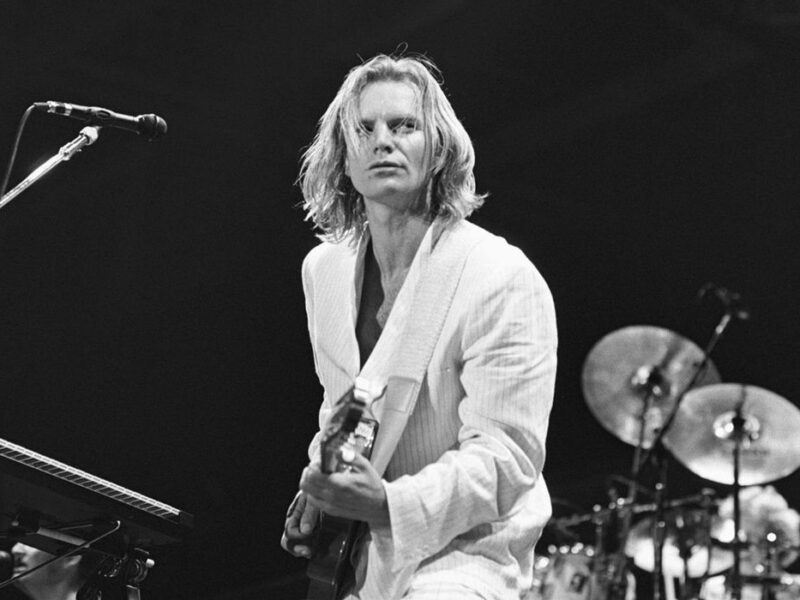

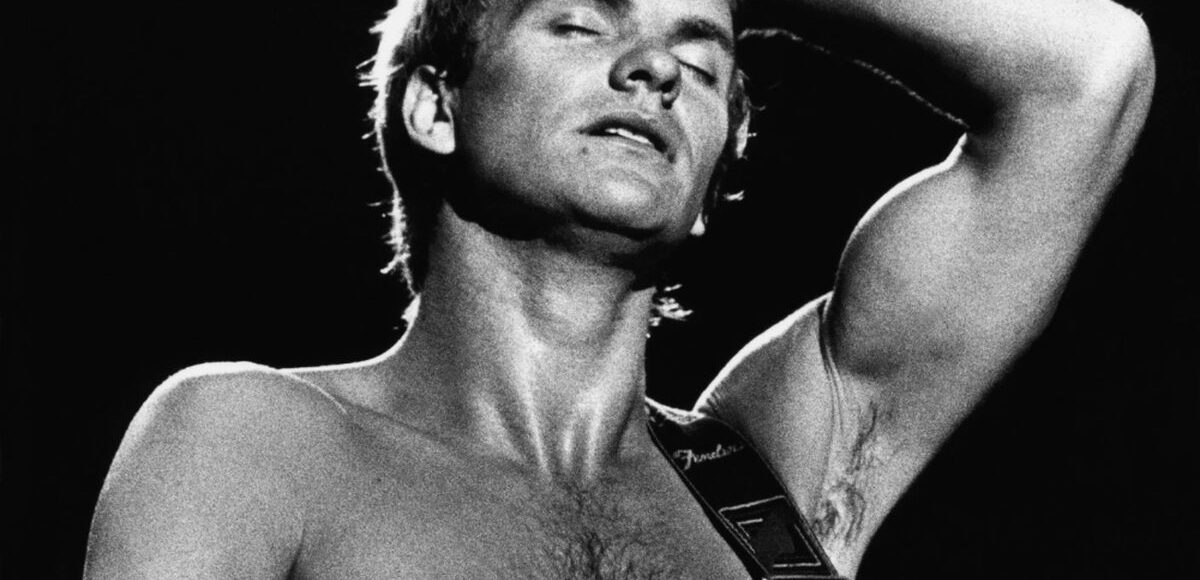
From The Police trio to solo songs built for quiet rooms and big rooms
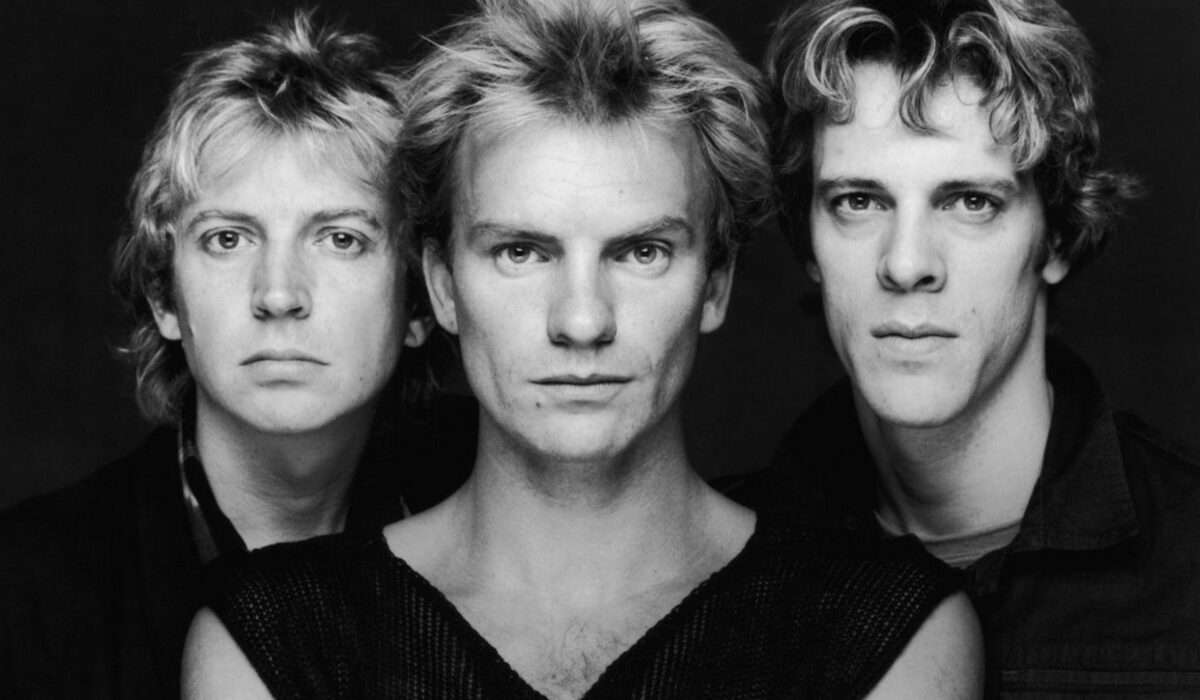
Gordon Sumner grew up on Tyneside, the son of a milkman, and taught English at a primary school before his bass and voice got him out. The early Newcastle jazz scene sharpened his timing; a short stint with Last Exit gave him a taste of fusion and the habit of playing around the beat rather than on it. When he arrived in London in 1977 and formed The Police with American drummer Stewart Copeland and guitarist Andy Summers, the collision was deliberate: a reggae-inflected skeleton, Summers’ open chord voicings, and Sting’s melodic bass runs locked into a unit that sounded unlike anything on the British punk scene at the time.
The Police built quickly. Outlandos d’Amour (1978) contained “Roxanne” and “So Lonely”, early signals of a band that could push energy through restraint rather than volume. Reggatta de Blanc (1979) and Zenyatta Mondatta (1980) kept the rhythm taut while widening the hooks. Ghost in the Machine (1981) introduced horns and a colder, more synthetic texture. Then Synchronicity (1983) landed: “Every Breath You Take,” “King of Pain,” and “Wrapped Around Your Finger” made The Police the most commercially successful rock band in the world that year. Sting’s bass was as much a melodic instrument as a rhythmic one, and the album’s precision hid real tension.
The solo move was not a retreat. The Dream of the Blue Turtles (1985) brought in jazz players: Branford Marsalis on saxophone, Kenny Kirkland on keys, Omar Hakim on drums. That was a statement, not a gesture. “If You Love Somebody Set Them Free” charted; “Russians” and “Children’s Crusade” did not pull punches lyrically. Nothing Like the Sun (1987) gave the world “Englishman in New York,” with Marsalis’s clarinet circling Sting’s portrait of Quentin Crisp, and “Fragile,” a spare guitar ballad written after a roadie was shot dead in Nicaragua. The record showed a songwriter who read widely and let it show without becoming pretentious.
The Soul Cages (1991) was the slowest of the solo albums, written after his father’s death and set in the industrial landscape of northeast England. Ten Summoner’s Tales (1993) balanced grief with craft: “Fields of Gold” reached for Northumbrian landscape; “Shape of My Heart” used a classical guitar figure by Dominic Miller over a lyric about a card player who plays not for money but for meaning. Both became radio standards that held up outside any playlist context.
Mercury Falling (1996) and Brand New Day (1999) kept the adult pop format while his tours grew steadily larger and more theatrical. Later works explored Renaissance lute songs on Songs from the Labyrinth (2006) and a semi-autobiographical musical, The Last Ship (2013), set in the Tyneside shipyards of his childhood. Collaborations with Dire Straits’ Mark Knopfler, Branford Marsalis on multiple projects, and a 2019 album with Shaggy showed a singer who still liked other rooms.
Throughout, the core sound stayed identifiable: melodic bass as lead voice, clean and uncluttered guitar parts, arrangements that left room between the instruments. Sting’s voice, a light high tenor with clear diction, never chased power. It preferred precision. Critics sometimes called the later albums polished to the point of distance; the live recordings suggested he was more comfortable with a smaller band, and some Police-era songs gained warmth when stripped of production.
The double catalogue holds because the two projects do not fight. The Police songs are leaner and faster. The solo records move more slowly and think out loud more often. Both rely on the same melodic instinct rooted in bass rather than guitar, which gives even the softer songs a grounded feel that distinguishes them from the smoother end of adult contemporary.
Entry points depend on where you want to start. For The Police, “Roxanne” and “Every Breath You Take” remain the quickest routes in; Synchronicity as a complete album still plays as a coherent artistic statement. For solo work, Ten Summoner’s Tales and The Dream of the Blue Turtles sit closest to what Sting does best: songs where the arrangement earns its keep and the lyric does not need a translator. “Shape of My Heart,” “Fields of Gold,” and “Englishman in New York” each stand on their own.
Compared with contemporaries like Peter Gabriel or David Bowie, Sting stayed within a narrower emotional and sonic register, but that consistency was the method. He built a career on the idea that craft and warmth are not opposites, and most of the records hold up as evidence. The badge was The Police. The bass line kept working long after.