
Four voices, one architecture
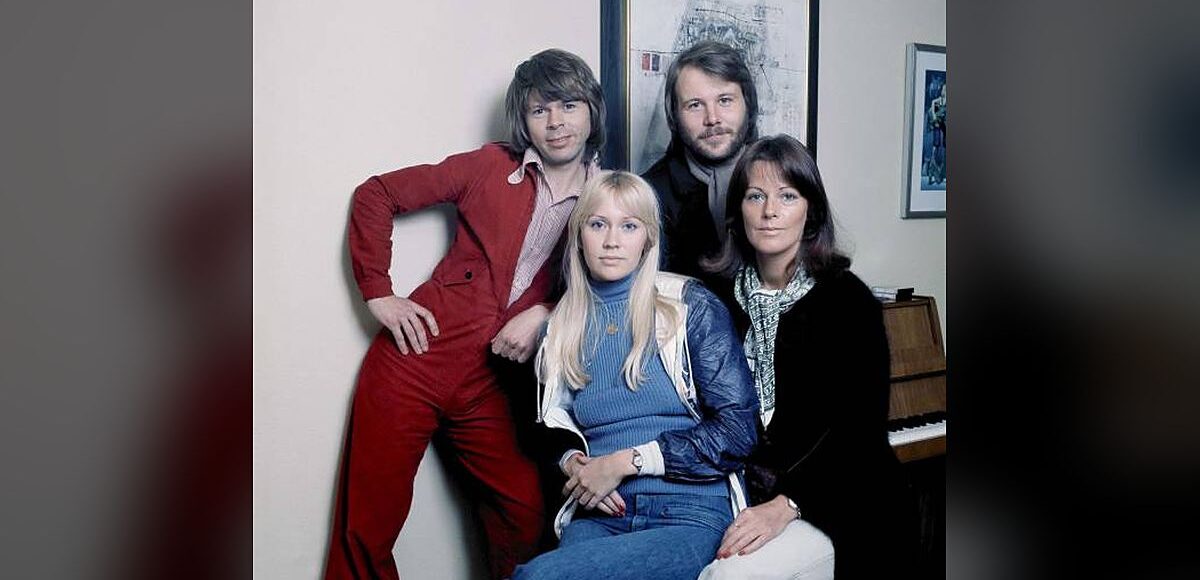
Stockholm, April 1976. Four people pose in a room with a piano at the edge of the frame, and the photograph already knows what the records are doing. The clothes are bright. The faces are not selling a joke. Benny Andersson and Björn Ulvaeus have spent the previous years learning how to build a chorus the way other people build a staircase: each step load-bearing, each landing a place the ear can rest. Agnetha Fältskog and Anni-Frid Lyngstad sing those stairs as if they were conversations. The engineer Michael B. Tretow is in the other room, doubling voices until a quartet sounds like a weather front. The album that will hold Dancing Queen is not finished as a mood. It is finished as a machine.
The machine has a public birthday that is easier to date than the private one. On 6 April 1974, at the Dome in Brighton, they win Eurovision with Waterloo. Stig Anderson, manager and co-writer, has already understood that a contest can be a door if you walk through it and keep walking. Polar Music is the house. The name Abba, taken from their initials, is also the name of a Swedish canned fish company, which they settle with a courtesy that says something about how seriously they take the practical. The first international rush is sugar and brass. What matters is what they do after the sugar.
ABBA in 1975 and then Arrival in 1976 are the turn. Mamma Mia, Fernando, Dancing Queen, Knowing Me, Knowing You, Money, Money, Money: the titles look like a party invitation, and the records are parties, but the harmony writing is closer to a small orchestra than to a disco single. Andersson’s piano keeps the emotional plot. Ulvaeus edits the lyric until it scans. Fältskog’s soprano carries the wound. Lyngstad’s mezzo carries the ground. Tretow’s wall of vocals is not decoration. It is the room they live in. Dancing Queen reaches number one in Britain and, later, in America. The group does not pretend this is an accident. They also do not pretend it is the whole job.
The job gets harder as the marriages do. Björn and Agnetha, married since 1971, separate at the end of the decade. Benny and Frida, married in 1978, will not last much longer. The songs do not hide this. The Winner Takes It All, on Super Trouper in 1980, is a divorce written as a melody so clean it feels unfair. The Visitors, in 1981, is colder still: When All Is Said and Done, One of Us, a title track that already sounds like a house after the guests have left. They record at Polar Studios, the room they built, which Led Zeppelin will borrow for In Through the Out Door. Even their architecture gets rented by other myths. By 1982 the group has stopped. There is no scandal tour. There is a catalog and a silence.
The silence turns out to be a second career. ABBA Gold, compiled in 1992, teaches a new decade the songs without asking the singers to stand in front of them. The musical Mamma Mia! does the rest, then the film. What returns is not nostalgia exactly. It is the discovery that the choruses were built to survive the people who sang them. In 2016 the four of them are photographed together again, carefully, as if a reunion were a chemical that should be handled with gloves. They are not promising a tour. They are checking whether the room still exists.
It does. Voyage arrives on 5 November 2021, nine songs, no attempt to impersonate 1976 and no apology for melody. Then, on 27 May 2022, a purpose-built arena in London opens ABBA Voyage: digital figures, a live band behind them, the four originals absent and somehow more present than a cash-in would allow. The avatars are not a trick played on the past. They are a way of admitting that the voices were always a little larger than the bodies. Andersson and Ulvaeus still write as if a chorus were a civic duty. Fältskog and Lyngstad still own the frequencies.
Abba’s cult status is an odd one, because the cult includes almost everyone. The accusation used to be that they were too finished, too bright, too willing to please. The records answer by being finished on purpose. Under the glitter there is a fracture, and they never sand it out of the song. They harmonize it. That is the craft. A dancing queen is seventeen for three minutes. The architecture lasts longer than the night.