Alone at the desk, politics in the hooks
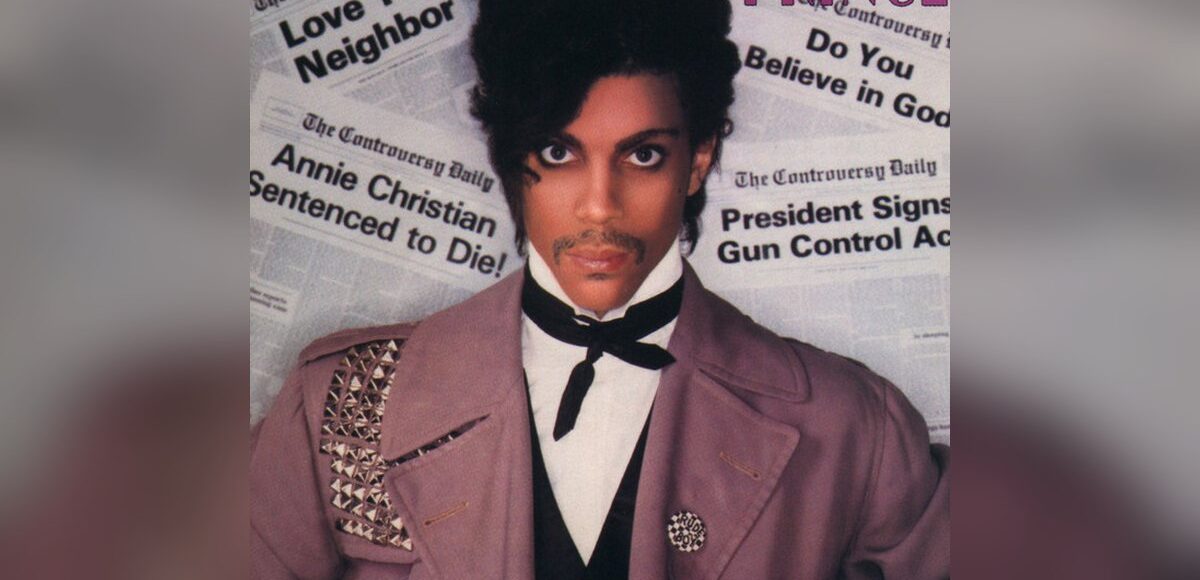
On 14 October 1981 Warner Bros. released Controversy, Prince’s fourth album, written and produced almost entirely by him at Kiowa Trail, Hollywood Sound, and Sunset Sound across sessions that clustered in the summer of 1981. After the bare-bones shock of Dirty Mind, the record keeps the synth-funk chassis and adds louder political and religious talk. It is also the first Prince sleeve that locks him to purple as a brand colour, with Allen Beaulieu’s newspaper-collage portrait – “The Controversy Daily” headlines behind him – on the front.
The seven-minute title track lists the questions press kept asking about his race and sexuality, then drops into a spoken Lord’s Prayer before the groove returns. Sexuality and Let’s Work push dancefloor utility with claps and dry synth stabs; Do Me, Baby stretches a quiet-storm ballad past seven minutes on electric piano; Ronnie, Talk to Russia names Reagan in under two minutes; Annie Christian folds news headlines into a synth narrative; Private Joy keeps a lighter bubblegum-funk bounce; Jack U Off closes on rockabilly synth bounce with Lisa Coleman, Dr. Fink, and Bobby Z. already pointing toward the Revolution lineup.
Singles rolled out across late 1981 and 1982 – Controversy, Sexuality abroad, Let’s Work, Do Me, Baby – while Prince toured the material with a band that already pointed toward the Revolution. Sensational spelling in titles (U, 2) becomes a habit here. Bernie Grundman mastered the vinyl at A&M; the compact 37-minute runtime keeps it sharper than the later double-album sprawl of 1999.
On Controversy, that libertine proclaims unfettered sexuality as the fundamental condition of a new, more loving society than the bellicose, overtechnologized America of Ronald Reagan.
(Stephen Holden, Rolling Stone, January 1982)

The album reached number 21 on the Billboard 200 and number 3 on the R&B albums chart, went platinum in the US, and placed eighth in the 1981 Pazz & Jop critics’ poll. It did not yet give him a Hot 100 smash on the scale of 1999, but it widened the lane from cult Minneapolis provocateur to national R&B/pop contender. UK gold certification later underlines how the catalogue kept selling after the breakthrough years.
The takeaway is transitional and concrete: one-man studio funk with a band starting to appear, purple as packaging, and lyrics that argue with the news as hard as they argue with desire. Without Controversy, the leap to the double-album ambition of 1999 is harder to hear. It remains the cleanest early-80s document of Prince learning to preach and party on the same side of a vinyl record.